
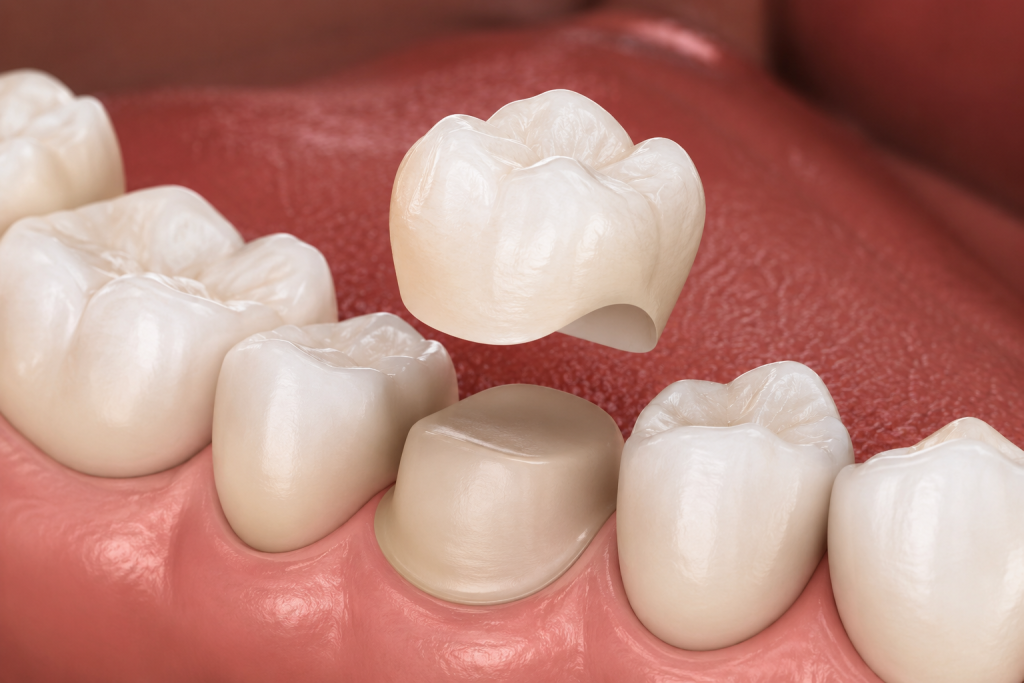
A replacement for a dental crown may become necessary when an existing crown becomes damaged, worn, loose, or affected by decay beneath the restoration. While many crown replacements can be performed by a general dentist, some situations involve underlying tooth problems that require specialist evaluation.
Patients frequently ask whether they should consult a dentist or an endodontist when replacing a dental crown. The answer depends on the condition of both the crown and the tooth supporting it. In some cases, replacing a dental crown is straightforward. In others, complications such as infection, root canal failure, or tooth fractures must be addressed before a new crown can be placed.
This guide explains what a dental crown replacement involves, who can perform it, when specialist care may be necessary, and how to determine the most appropriate treatment pathway.
Dental Crown Replacement at a Glance
What Is a Dental Crown Replacement?
A dental crown replacement is the process of removing an existing dental crown and placing a new crown over the tooth. Replacement may be necessary when a crown becomes damaged, worn out, loose, poorly fitting, or when decay develops beneath the restoration. The goal is to restore function, protect the tooth, and maintain long-term oral health.
Who Should Perform a Dental Crown Replacement?
Most dental crown replacements can be performed by a general dentist. However, if the tooth beneath the crown has signs of infection, root canal complications, persistent pain, deep decay, or structural damage, an endodontist may need to evaluate and treat the tooth before a new crown is placed.
Key Takeaways
- Most dental crown replacements can be completed by a general dentist.
- Teeth with previous root canal treatment may require specialist evaluation before crown replacement.
- Pain, swelling, or infection beneath a crown may indicate underlying tooth problems.
- Dental crowns typically last 10–15 years or longer, depending on maintenance and oral habits.
- Early treatment of a failing crown can help prevent more extensive dental procedures.
What Is a Dental Crown and Why Is It Used?
A dental crown is a custom-made restoration that covers the visible portion of a tooth. It helps strengthen weakened teeth, restore function, and improve appearance.
Crowns are commonly used for:
- Teeth weakened by large fillings
- Teeth that have undergone root canal treatment
- Cracked or fractured teeth
- Severely worn teeth
- Cosmetic improvements
- Dental implant restorations
Because crowns protect the underlying tooth structure, maintaining their integrity is important for long-term oral health.
Common Reasons for a Dental Crown Replacement
Although dental crowns are designed to be durable, they do not last forever. Over time, several factors can affect their performance.
Normal Wear and Tear
Years of chewing and biting forces can gradually wear down a crown. This is especially common among patients who grind or clench their teeth.
Signs may include:
- Flattened chewing surfaces
- Reduced chewing efficiency
- Visible wear
- Bite changes
Cracked or Fractured Crown
Crowns may crack due to:
- Accidental trauma
- Teeth grinding
- Biting hard foods
- Material fatigue over time
Even small fractures can allow bacteria to enter beneath the crown.
Decay Beneath the Crown
A common reason for dental crown replacement is recurrent decay around the crown margin.
This can occur when:
- The seal between crown and tooth deteriorates
- Oral hygiene becomes difficult around the restoration
- Crown margins become damaged
Decay beneath a crown often requires prompt treatment to prevent further complications.
Loose Crown
A crown may loosen because:
- Dental cement deteriorates
- The supporting tooth changes shape
- Decay develops underneath
A loose crown should be assessed promptly to prevent additional damage.
Cosmetic Concerns
Some patients replace older crowns because of:
- Discolouration
- Visible metal margins
- Poor aesthetic match
- Newer crown materials becoming available
How Long Does a Dental Crown Last Before Replacement Is Needed?
The lifespan of a dental crown depends on several factors, including the material used, oral hygiene practices, bite forces, and regular dental care.
| Crown Material | Average Lifespan |
| Porcelain-fused-to-metal | 10–15 years |
| All-ceramic crowns | 10–15 years |
| Zirconia crowns | 15 years or longer |
| Gold crowns | 15–20+ years |
Many crowns remain functional for significantly longer when properly maintained.
How Do You Know If You Need a Dental Crown Replacement?
Several warning signs may indicate that an existing crown requires professional evaluation.
These include:
- Loose crown
- Chipped crown
- Cracked crown
- Pain beneath the crown
- Sensitivity to hot or cold temperatures
- Swollen gums around the tooth
- Food trapping around the crown
- Persistent bad taste or odour
- Changes in bite alignment
- Recurrent infection
Not every symptom means the crown must be replaced, but all warrant assessment.
Can a Dental Crown Be Repaired Instead of Replaced?
In some situations, a damaged crown may be repaired rather than replaced. The appropriate option depends on the extent of the problem.
| Situation | Repair Possible | Replacement Recommended |
| Minor porcelain chip | Yes | Sometimes |
| Loose crown with healthy tooth | Yes | Sometimes |
| Damaged crown margin | Sometimes | Often |
| Significant crown fracture | No | Yes |
| Decay beneath crown | No | Yes |
| Poor crown fit | No | Yes |
| Extensive wear | No | Yes |
A clinical examination is required to determine whether repair or replacement is the most suitable solution.
What Happens During a Dental Crown Replacement Procedure?
The dental crown replacement procedure typically involves several steps.
Clinical Examination
The dentist evaluates:
- Crown integrity
- Tooth structure
- Gum health
- Bite relationship
- Signs of infection
Dental imaging may also be performed.
Crown Removal
The existing crown is carefully removed while preserving healthy tooth structure.
Assessment of the Underlying Tooth
The tooth is examined for:
- Decay
- Cracks
- Root canal complications
- Structural damage
- Infection
This stage is critical because hidden problems may influence treatment decisions.
Tooth Preparation and Digital Scanning
The tooth is prepared as needed, and impressions or digital scans are taken for fabrication of the new crown.
Placement of the New Crown
Once completed, the new crown is fitted, adjusted, and bonded securely to the tooth.
How Do You Know Whether You Need a Dentist or an Endodontist?
Many patients are unsure whether a general dentist or an endodontist is the appropriate professional for crown-related concerns.
The following guide can help.
See a General Dentist If:
- Your crown is old or worn
- The crown feels loose
- The crown is chipped
- You have no pain or infection
- The tooth appears healthy
Consider Seeing an Endodontist If:
- Pain persists beneath the crown
- Swelling develops around the tooth
- A previous root canal-treated tooth becomes symptomatic
- Infection is suspected
- Imaging reveals root-related complications
- Root canal retreatment may be necessary
An endodontist specialises in diagnosing and treating problems affecting the dental pulp and root canal system.
If pain, infection, swelling, or root canal complications are present beneath a crowned tooth, consulting an endodontist in Singapore may be recommended before proceeding with a dental crown replacement. An endodontist specialises in diagnosing and treating conditions affecting the dental pulp and root canal system.
When Should You See an Endodontist for a Dental Crown Replacement?
Many crowns are placed on teeth that have previously undergone root canal treatment.
An endodontist may be recommended if you experience:
- Ongoing pain beneath a crowned tooth
- Swelling or abscess formation
- Tenderness when biting
- Persistent infection
- Deep decay approaching the root canal system
- Suspected root fractures
- Symptoms returning after previous root canal treatment
Addressing these issues before replacing a crown can improve the long-term prognosis of the tooth.
Can a Crown Be Replaced Without Repeating Root Canal Treatment?
Yes. Many crown replacements do not require additional root canal treatment.
If the tooth remains healthy and free from infection, a new crown can often be placed without further intervention.
However, root canal retreatment may be necessary if:
- Infection is present
- A previous root canal has failed
- New decay has reached the root canal system
- Cracks affect the pulp or root
A thorough assessment is necessary before treatment planning.
What Factors Affect the Cost of a Dental Crown Replacement?
The cost of a dental crown replacement can vary depending on several clinical factors.
These may include:
- Type of crown material used
- Location of the tooth
- Complexity of treatment
- Amount of remaining tooth structure
- Need for root canal retreatment
- Presence of infection or structural damage
- Laboratory and fabrication requirements
Patients should discuss treatment options with their dentist or specialist to understand the factors influencing overall treatment costs.
What Happens If You Delay a Dental Crown Replacement?
Delaying treatment for a failing crown can lead to additional complications.
Potential consequences include:
- Progression of tooth decay
- Crown dislodgement
- Tooth fracture
- Root infection
- Bone loss around the tooth
- More complex treatment requirements
- Possible tooth loss
Early intervention often allows for more predictable and conservative treatment.
General Dentist vs Endodontist for Dental Crown Replacement
| General Dentist | Endodontist |
| Performs routine crown replacement | Specialises in root canal-related conditions |
| Evaluates crown fit and function | Diagnoses pulp and root disease |
| Treats minor decay around crowns | Manages complex infections |
| Provides preventive dental care | Performs root canal retreatment |
| Suitable for uncomplicated cases | Suitable for complex crown-related symptoms |
In many situations, both professionals work together to achieve the best outcome for the patient.
How to Protect a New Dental Crown

Proper maintenance can help maximise the lifespan of a replacement crown.
Recommended practices include:
- Brushing twice daily
- Cleaning carefully around crown margins
- Flossing regularly
- Attending routine dental examinations
- Avoiding chewing hard objects
- Wearing a night guard if you grind your teeth
- Seeking prompt treatment if the crown becomes loose or damaged
Good oral hygiene remains one of the most important factors influencing long-term crown success.
Frequently Asked Questions (FAQs)
How do I know if my dental crown needs replacing?
A dental crown may need replacement if it becomes loose, cracked, chipped, worn, painful, or if decay develops beneath it. Other warning signs include gum swelling, food trapping, sensitivity, or bite changes. A dental examination can determine whether repair or replacement is necessary.
Can a loose dental crown be reattached instead of replaced?
In some cases, a loose crown can be cleaned and recemented if both the crown and underlying tooth remain healthy. If the crown is damaged or decay is present, replacement may be recommended.
Is a dental crown replacement painful?
Most patients experience minimal discomfort during a dental crown replacement. Local anaesthesia may be used where necessary to ensure comfort throughout the procedure.
How long does a dental crown replacement take?
Most dental crown replacements require two appointments, although some clinics offer same-day crown technology depending on the case and available equipment.
Can decay develop underneath a dental crown?
Yes. Although the crown itself cannot decay, the natural tooth beneath it can. Recurrent decay is one of the most common reasons for dental crown replacement.
Do all crowned teeth eventually need replacement crowns?
Not necessarily. However, most crowns eventually require replacement due to wear, damage, recurrent decay, or changes affecting the supporting tooth.
Should I see an endodontist if my crowned tooth hurts?
If pain persists beneath a crown, especially in a tooth that has previously undergone root canal treatment, an endodontist can assess whether infection, retreatment, or another root-related issue is present.
Can a root canal-treated tooth receive a new crown?
Yes. Many root canal-treated teeth successfully receive replacement crowns once the tooth has been evaluated and any underlying issues have been addressed.
Consult Dr. Seah If You Need an Assessment for a Dental Crown Replacement

A dental crown replacement can help restore the function, comfort, and protection of a damaged or ageing restoration. While many crown replacements are straightforward, some cases involve underlying concerns such as recurrent decay, root canal complications, infection, or cracks within the tooth structure.
If you are experiencing pain beneath a crown, recurring swelling, sensitivity, or concerns about a previously treated tooth, a thorough assessment can help determine whether the tooth is suitable for crown replacement or if additional treatment may be required first.
Dr. Seah provides evaluation and treatment for patients with complex crown-related concerns, including teeth that have undergone root canal treatment, require root canal retreatment, or show signs of endodontic disease. A detailed examination can help identify the underlying cause of symptoms and support informed treatment decisions. Schedule an appointment with our team today.