


Dry socket prevention after wisdom tooth extraction mainly involves protecting the blood clot that forms inside the extraction site and avoiding activities that may interfere with early healing. The blood clot acts as a temporary protective layer over the underlying bone and tissues while the socket begins to recover.
Dry socket, also called alveolar osteitis, occurs when this blood clot breaks down, becomes displaced or does not form adequately. The condition can expose underlying bone and cause significant pain, typically developing a few days after tooth removal rather than immediately after the procedure.
Following the dentist’s aftercare instructions, avoiding smoking, keeping the mouth appropriately clean and minimising unnecessary disturbance of the extraction site can help reduce the risk. However, dry socket cannot always be completely prevented, even when aftercare instructions are followed carefully.
Key Takeaways
Dry socket prevention focuses on protecting the extraction site during the earliest stages of healing.
Important points include:
- A stable blood clot is important for normal healing after wisdom tooth extraction.
- Dry socket usually develops several days after extraction rather than immediately.
- Smoking is an established risk factor for dry socket.
- Avoid unnecessary suction or mechanical disturbance around the extraction site.
- Follow the dentist’s instructions about rinsing and cleaning the mouth.
- Choose foods that do not require excessive chewing during early recovery.
- Do not probe the socket with fingers, toothpicks or other objects.
- Severe pain that increases several days after extraction should be assessed by a dentist.
- Dry socket is treatable and does not necessarily mean the extraction has become infected.
Individual post-operative instructions should take priority because the appropriate aftercare can differ depending on the type and complexity of the wisdom tooth extraction.
What Is a Dry Socket?
Dry socket is a painful complication that can occur after a permanent tooth has been removed. Its clinical name is alveolar osteitis. Normally, a blood clot forms inside the socket shortly after extraction. The clot protects the underlying bone and nerve endings while new tissue begins developing.
In a dry socket, the protective clot is lost or breaks down prematurely. This can leave the underlying tissues exposed and produce significant pain. Dry socket is particularly associated with extraction of lower wisdom teeth, although it can occur following removal of other permanent teeth.
The condition does not mean that every part of the normal healing process has failed. It represents a disruption of early socket healing that usually requires professional management to control symptoms while the area continues recovering.
Why Is the Blood Clot Important?
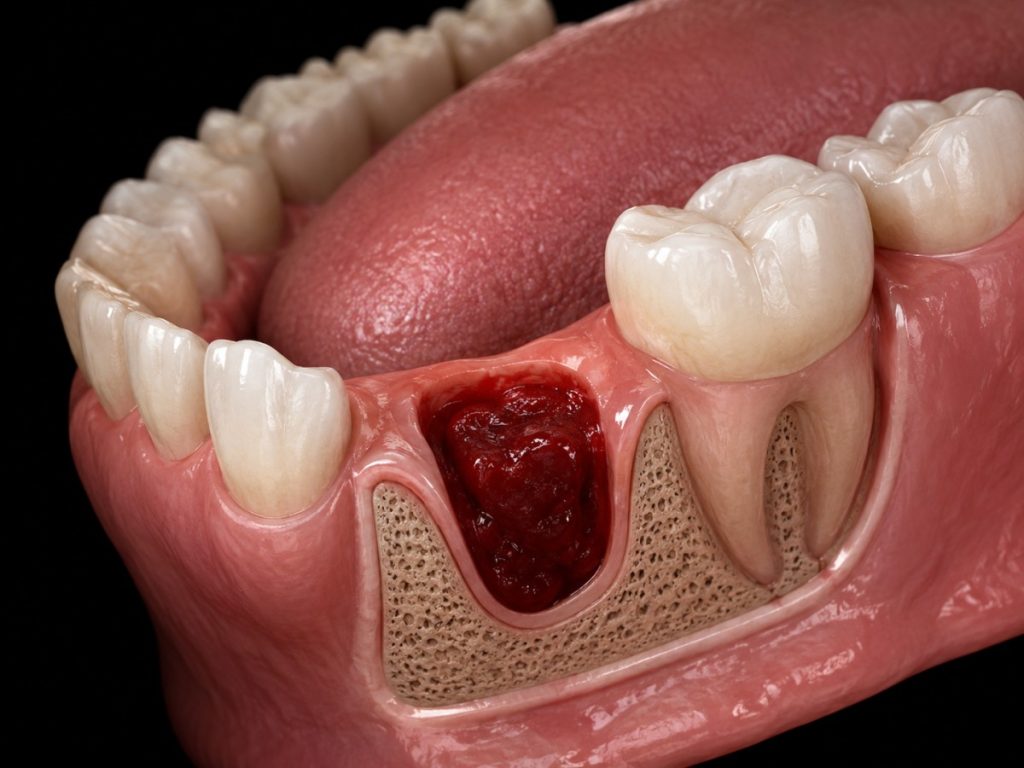
The blood clot is important because it provides early protection to the tissues inside the extraction socket. When a wisdom tooth is removed, an empty socket remains within the gum and jawbone.
Bleeding immediately after extraction allows a clot to form within this space. The clot acts as a temporary biological covering while the body begins producing new tissue. Over time, the extraction site undergoes further soft-tissue and bone healing.
For this reason, many post-operative instructions are designed to avoid unnecessary disturbance during the period when the clot is forming and stabilising.
Protecting the clot does not require leaving the entire mouth unclean. Instead, oral hygiene needs to be adjusted so the extraction site is treated gently while the rest of the mouth remains appropriately cleaned.
Why Does Dry Socket Happen?
Dry socket can develop when the blood clot within the extraction site fails to remain stable during the early healing period. The exact cause is not always identifiable in an individual patient.
Certain factors are associated with a greater likelihood of developing the condition.
Smoking
Smoking is associated with an increased risk of dry socket and delayed healing after tooth extraction. The physical action of smoking can create pressure changes within the mouth, while tobacco exposure can also adversely affect oral wound healing.
Patients who smoke should discuss this with their dentist before wisdom tooth surgery. The clinician can provide specific instructions about avoiding smoking during the recovery period.
Difficult Wisdom Tooth Extraction
More complex surgical extractions can carry a higher risk of post-operative complications than straightforward tooth removal. An impacted lower wisdom tooth may require gum incision, bone removal or sectioning of the tooth.
This creates greater surgical manipulation of the surrounding tissues. The risk does not mean that surgical extraction should be avoided when clinically necessary. It means that appropriate treatment planning and aftercare become particularly important.
Disturbing the Extraction Site
Repeatedly touching or probing the extraction site can interfere with early healing. Patients may sometimes become concerned about the appearance of the socket and attempt to clean it with their fingers, toothpicks or other objects which should be avoided.
The extraction socket can look unusual during normal recovery, and direct manipulation can cause irritation or bleeding.
How to Prevent Dry Socket
Dry socket cannot be prevented with absolute certainty, but several aftercare measures can reduce avoidable risks. The most important principle is to follow the instructions given by the treating dentist because these are based on the actual extraction performed.
1. Protect the Extraction Site During the First 24 Hours
The first 24 hours are an important period for blood clot formation and stabilisation. Avoid unnecessary manipulation of the extraction site during this time.
Do not repeatedly inspect the socket with your fingers or tongue. If gauze has been provided, use it according to the dentist’s instructions rather than continually removing and replacing it without reason.
Some mild oozing occurring after extraction is normal. Persistent or heavy bleeding should be discussed with the dental clinic rather than managed through aggressive rinsing.
2. Avoid Smoking During Recovery
Avoiding smoking is one of the more important modifiable steps for dry socket prevention. Smoking can negatively affect oral wound healing and is associated with an increased risk of alveolar osteitis.
Patients should follow the specific period of smoking avoidance recommended by their dentist. The longer-term health benefits of stopping smoking extend beyond wisdom tooth recovery, but even within the immediate post-operative period, avoiding tobacco exposure can support the healing environment.
Patients who find it difficult to stop should discuss this before surgery rather than waiting until after extraction.
3. Avoid Drinking Through a Straw
Drinking through a straw is commonly discouraged during the early healing period because it creates suction within the mouth. The concern is that unnecessary pressure changes could disturb the developing blood clot.
Drinking directly from a cup is a straightforward alternative. This recommendation is particularly relevant during the initial stage of recovery when the clot is still stabilising.
Patients should follow their dentist’s instructions regarding how long to avoid straws because recommendations may vary according to the extraction.
4. Do Not Rinse Aggressively
Aggressive rinsing immediately after wisdom tooth extraction can unnecessarily disturb the surgical area. During early healing, follow the dentist’s instructions about when rinsing should begin and how it should be performed.
Once rinsing is appropriate, it should generally be gentle rather than forceful. The objective is to support oral cleanliness without creating unnecessary mechanical disturbance within the extraction socket.
If a specific mouth rinse has been prescribed or recommended, use it according to the instructions rather than increasing the frequency or concentration independently.
5. Maintain Appropriate Oral Hygiene
Good oral hygiene remains important after wisdom tooth extraction, but the surgical area needs to be treated carefully. Other teeth should continue to be cleaned according to the dentist’s instructions.
Plaque control helps maintain a healthier oral environment while the extraction site heals. Avoid aggressively brushing directly inside a fresh socket.
As healing progresses, the dentist may provide additional instructions for cleaning around the area. Patients should not assume that avoiding the extraction site means stopping oral hygiene throughout the mouth.
6. Choose Soft Foods During Early Recovery
Soft foods can reduce unnecessary chewing and irritation around a newly extracted wisdom tooth. Suitable choices may include soft eggs, yoghurt, mashed vegetables, porridge, tofu and smooth soups that have cooled to a comfortable temperature.
Hard, sharp or crunchy foods are generally less suitable during early recovery. Food selection should also consider whether small particles are likely to become trapped around the socket.
As pain and swelling decrease, firmer foods can gradually be reintroduced according to comfort.
Foods and Habits to Avoid
Certain foods and habits are best avoided during early wisdom tooth recovery because they may irritate the extraction site or interfere with comfortable healing. These can include:
- Hard or sharp foods such as nuts and very crisp snacks.
- Smoking or tobacco exposure.
- Drinking through straws during the restricted period.
- Aggressive rinsing or spitting.
- Directly probing the socket with fingers or objects.
- Activities specifically restricted by the treating dentist.
These precautions are not a guarantee against dry socket. They are intended to reduce avoidable disruption of the healing extraction site.
Should You Avoid Exercise?
Strenuous physical activity is commonly restricted for a short period after wisdom tooth extraction because exercise can increase blood pressure and contribute to bleeding or throbbing around the surgical site.
Rest is particularly useful immediately after surgery. The appropriate time for returning to exercise depends on the complexity of the extraction and the patient’s recovery.
Light daily activities may be possible relatively quickly after an uncomplicated procedure. More strenuous exercise should be resumed according to the dentist’s advice and when bleeding, significant swelling and discomfort have settled.
Exercise itself is not the defining cause of dry socket, but avoiding excessive physical strain is part of general post-operative care.
What Does Normal Wisdom Tooth Healing Feel Like?
Normal healing generally involves soreness and swelling that become progressively better rather than worse. Pain is expected after local anaesthesia wears off.
Swelling may become more noticeable during the first two or three days before beginning to settle. Jaw stiffness, mild bruising and temporary difficulty chewing can also occur.
The key feature is the direction of recovery. If discomfort is gradually becoming easier to manage, this generally fits the expected healing pattern.
A sudden increase in pain several days after the extraction is more concerning and should be professionally assessed.
What Are the Signs of Dry Socket?
The main sign of dry socket is significant pain that develops or becomes substantially worse several days after tooth extraction. This differs from ordinary post-operative soreness, which should generally begin improving.
Possible symptoms include:
- Severe or increasing pain a few days after extraction.
- Throbbing pain that may spread towards the ear, temple or jaw.
- An unpleasant taste in the mouth.
- Bad breath associated with the affected area.
- An extraction socket that appears relatively empty.
The appearance of the socket alone should not be used for self-diagnosis. Normal healing tissue can look unfamiliar, so symptoms and professional examination are more reliable.
Dry Socket vs Normal Post-Extraction Pain
Dry socket pain differs from normal extraction discomfort mainly in its timing and progression. Normal pain is expected after surgery and is often most noticeable during the first few days. It should then gradually become less severe.
Dry socket commonly becomes noticeable when pain increases rather than decreases during the days following extraction.
| Feature | Normal Recovery | Possible Dry Socket |
| Pain pattern | Gradually improves | Becomes severe or worsens |
| Timing | Starts after extraction | Often becomes prominent after several days |
| Swelling | May occur and then settle | Not necessarily the main feature |
| Bad taste or breath | Not usually prominent | May occur |
| Treatment | Routine aftercare | Dental assessment required |
This comparison is a general guide and cannot replace examination by a dentist.
Is Dry Socket an Infection?

Dry socket is primarily a disturbance of socket healing rather than simply another name for a dental infection. This distinction matters because treatment is not necessarily the same as treatment for a dental abscess.
Patients with dry socket can experience significant pain without having the spreading swelling or systemic symptoms more typical of certain infections. Antibiotics are therefore not automatically required simply because a dry socket is present.
The dentist should determine whether there is evidence of infection or another complication before deciding whether medication is appropriate.
How Is Dry Socket Treated?
Dry socket treatment focuses primarily on reducing pain and supporting the extraction site while healing continues. The dentist first examines the socket to confirm the likely cause of symptoms.
The area may be gently cleaned to remove debris where appropriate. A medicated dressing may sometimes be placed in the socket to help control discomfort.
Pain management recommendations can also be provided according to the patient’s needs and medical history. Treatment does not usually involve replacing the original blood clot.
Instead, the objective is to manage symptoms and maintain an appropriate environment while natural tissue healing continues.
Should You Treat Dry Socket at Home?
Suspected dry socket should be assessed by a dentist rather than managed entirely through home remedies. Temporary pain relief does not establish why severe post-extraction pain has developed.
Other conditions, including infection, retained material or another surgical complication, can sometimes produce similar symptoms. Do not place aspirin, chemicals, oils or other substances directly inside the socket unless specifically instructed by a dental professional.
Direct application can irritate healing tissues. Home care should follow professional post-operative guidance rather than attempting to physically manipulate the extraction wound.
When Should You See Your Dentist?
Contact your dentist if pain becomes severe or substantially worsens after initially improving. This pattern can indicate dry socket or another post-operative complication.
A dental review is also appropriate for increasing swelling, persistent bleeding, fever or other unexpected symptoms. Dry socket itself is painful but usually manageable with appropriate dental care.
More urgent attention is needed if symptoms suggest spreading infection or facial or neck swelling associated with difficulty breathing and swallowing.
Does Dry Socket Delay Healing?
Dry socket can make the recovery period more uncomfortable and may delay the normal healing process.
The extraction site still has the ability to heal. Treatment focuses on controlling symptoms while new tissue gradually covers the exposed area.
Recovery time varies according to the extraction and individual patient. A person with dry socket may need additional dental visits for assessment or dressing changes.
Following the dentist’s instructions during this period remains important even when pain begins to improve.
Who Is More Likely to Develop Dry Sockets?
Some patients have a higher risk of dry socket than others, this can be influenced by the extraction itself and individual factors. Lower wisdom tooth surgery, difficult extraction and smoking are factors associated with increased risk.
Previous dry sockets may also be relevant to treatment planning. Patients should provide an accurate medical and dental history before wisdom tooth surgery.
This allows the clinician to identify relevant risks and provide suitable aftercare advice.
Frequently Asked Questions
What is the best way to prevent dry sockets?
The main approach is to protect the extraction site while it heals. Follow your dentist’s instructions, avoid smoking, minimise unnecessary suction and do not aggressively rinse or probe the fresh socket.
How long after wisdom tooth extraction can dry socket occur?
Dry socket most commonly becomes noticeable a few days after extraction. Severe pain that increases rather than improves during this period should be assessed by a dentist.
Can I get a dry socket even if I follow all the instructions?
Yes. Appropriate aftercare can reduce avoidable risks but cannot guarantee that dry socket will never occur. Individual healing and procedural factors also influence risk.
Does drinking through a straw cause dry socket?
Using a straw creates suction within the mouth and is commonly discouraged during early recovery because unnecessary pressure changes may disturb the extraction site. Follow the period recommended by your dentist.
Can smoking cause dry sockets?
Smoking is associated with an increased risk of dry socket and impaired oral wound healing. Avoiding smoking during recovery is therefore an important preventive measure.
Is severe pain normal three or four days after wisdom tooth extraction?
Some discomfort can remain, but the overall pattern should generally be one of improvement. Severe or rapidly worsening pain after initial improvement can indicate dry socket or another complication and should be reviewed.
Do antibiotics prevent dry sockets?
Antibiotics are not routinely used simply as a universal method of preventing dry socket. Their use should be based on the individual clinical situation and prescribed only when appropriate.
Can dry sockets heal without treatment?
The socket can eventually heal, but dry socket can cause substantial pain. Dental treatment can help manage symptoms and assess whether another complication is present.
Protecting the Socket Supports Early Healing
Dry socket prevention after wisdom tooth extraction centres on protecting the blood clot and avoiding unnecessary disruption during early recovery. Smoking, direct manipulation of the socket and other behaviours that interfere with the healing environment should be avoided.
Normal recovery can involve pain, swelling and jaw stiffness, particularly during the first few days. These symptoms should generally become progressively easier to manage.
Severe pain that begins or worsens several days after extraction is different from the usual pattern of recovery and may indicate dry socket. Prompt dental assessment can confirm the cause and provide appropriate treatment.
Get Guidance for a Safer Wisdom Tooth Recovery
If you are preparing for wisdom tooth removal or are experiencing increasing pain after an extraction, book a consultation with Dr Seah’s Root Canal Clinic to evaluate your wisdom tooth or healing extraction site. Our dentists will provide appropriate guidance for aftercare or treatment where necessary.
