


An infected wisdom tooth can cause pain, swollen gums, an unpleasant taste, pus, bad breath and difficulty opening the mouth. Infection commonly develops around a partially erupted wisdom tooth when bacteria and food debris collect beneath the gum tissue surrounding the tooth, a condition known as pericoronitis.
Wisdom tooth infection symptoms can range from mild local discomfort to significant swelling and systemic illness. A partially erupted lower wisdom tooth is particularly susceptible because the area can be difficult to clean effectively.
Not every painful wisdom tooth is infected, and not every infection means that immediate extraction is required. A dentist needs to assess the tooth, surrounding gums and nearby structures to determine whether the problem can be managed initially with local treatment or whether wisdom tooth extraction should be considered.
Increasing facial or neck swelling, difficulty swallowing or breathing, or significant systemic illness requires urgent assessment because dental infection can spread beyond the immediate tooth area.
Key Takeaways
An infected wisdom tooth most commonly develops when bacteria accumulate around a partially erupted third molar and cause inflammation or infection of the surrounding gum tissue.
Important points include:
- Pain and swollen gums around the back molar are common symptoms.
- Pus, an unpleasant taste and bad breath can occur.
- Difficulty opening the mouth may develop with more significant inflammation.
- Fever or feeling generally unwell can indicate a more significant infection.
- Recurrent infection around a wisdom tooth may lead to consideration of removal.
- Antibiotics are not automatically required for every wisdom tooth infection.
- Treating the underlying dental cause is more important than repeatedly suppressing symptoms.
- Rapidly worsening facial or neck swelling requires urgent assessment.
- Difficulty breathing or swallowing requires immediate medical care.
A dental examination can distinguish infection from tooth decay, another dental abscess, jaw-related pain or other conditions that can cause similar symptoms.
What Causes a Wisdom Tooth Infection?
A wisdom tooth infection commonly develops when bacteria and plaque accumulate around a tooth that has only partially erupted through the gum. The remaining gum tissue can form a flap over part of the tooth, creating an area that is difficult to clean.
Food debris can become trapped beneath this tissue, allowing bacteria to multiply. Several conditions can contribute to infection around a third molar.
Partially Erupted Wisdom Tooth
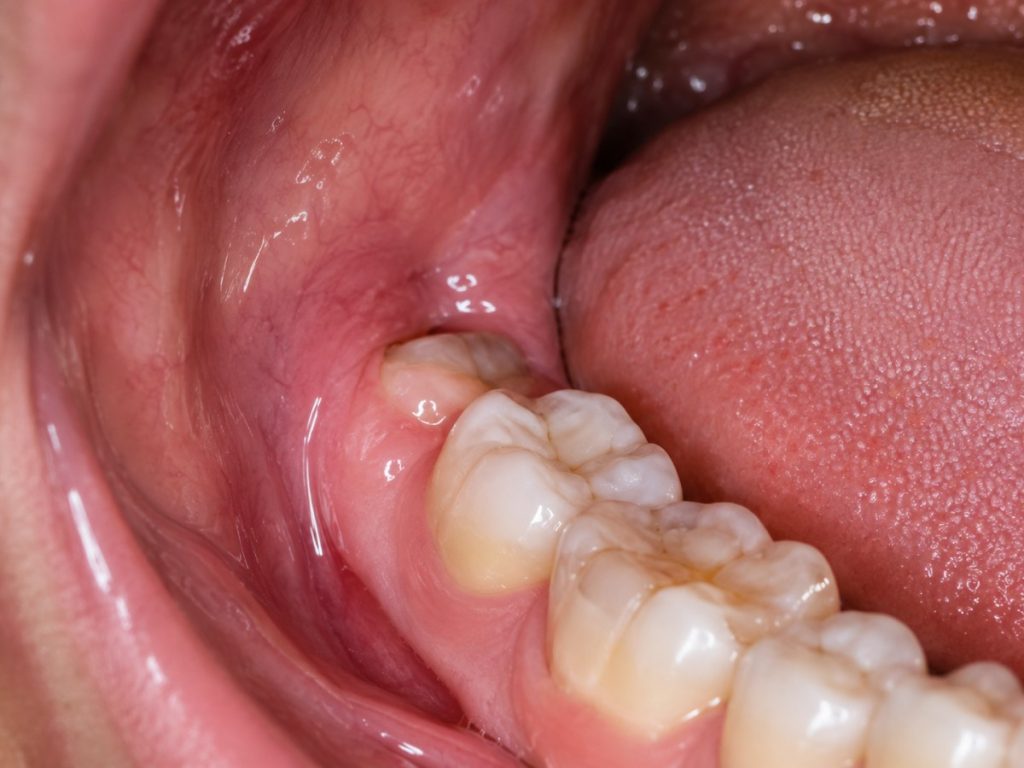
A partially erupted wisdom tooth is one of the most common situations associated with pericoronitis. Only part of the tooth is exposed while the rest remains beneath gum tissue. This makes ordinary brushing and interdental cleaning difficult.
The gum around the tooth can become inflamed, swollen and infected as plaque repeatedly accumulates. Pericoronitis is particularly common around lower wisdom teeth.
Impacted Wisdom Tooth
An impacted wisdom tooth cannot fully erupt into a normal position because of insufficient space, obstruction or an unfavourable angle.
Impaction itself is not an infection. However, a partially impacted tooth can create conditions that make plaque accumulation and recurrent gum inflammation more likely.
Tooth Decay
Wisdom teeth can develop decay because their position at the back of the mouth makes cleaning difficult. Decay can progress into deeper tooth tissues and eventually cause pulpal inflammation or infection.
The neighbouring second molar can also be affected when the contact area between the teeth is difficult to clean. Treatment therefore needs to determine whether symptoms originate primarily from the surrounding gum or from disease within the wisdom tooth itself.
Food and Plaque Accumulation
Food debris and bacterial plaque can become trapped beneath gum tissue surrounding a partially erupted wisdom tooth. This repeated accumulation can trigger inflammation.
If the tooth’s position makes the area permanently difficult to maintain, episodes can return even after an initial infection settles. Recurrent pericoronitis is a recognised reason wisdom tooth removal may be considered.
Common Infected Wisdom Tooth Symptoms
Infected wisdom tooth symptoms depend on the severity and extent of inflammation. Mild cases may cause temporary discomfort, while acute pericoronitis can produce severe pain, swelling, pus, difficulty swallowing and restricted jaw opening.
Pain Around the Back Molar
Pain is one of the most common symptoms of wisdom tooth infection. The discomfort usually develops around the affected third molar or surrounding gum.
It can become worse when chewing because food and biting pressure irritate the inflamed area.
Pain alone does not prove that infection is present. Tooth decay, cracked teeth and other dental conditions can also cause pain in the same region. A dental examination is therefore necessary when symptoms persist or recur.
Swollen or Red Gums
Swollen gum tissue around a partially erupted wisdom tooth is characteristic of pericoronitis. The tissue may appear red, tender and enlarged around the back molar.
Swelling can make brushing uncomfortable, which may allow more plaque to accumulate and further irritate the area. Persistent swelling should be evaluated rather than repeatedly avoided during cleaning.
Pus or Drainage
Pus can occur when bacterial infection develops around the wisdom tooth. It may appear around the gum or drain into the mouth, sometimes producing an unpleasant taste.
Drainage can temporarily reduce pressure and discomfort. However, the improvement does not necessarily mean that the underlying source has been resolved.
The affected area should still be assessed to determine why infection developed.
Bad Breath or Unpleasant Taste
Bad breath and an unpleasant taste can occur when bacteria, food debris and inflammatory discharge accumulate around a partially erupted wisdom tooth. Chronic pericoronitis may sometimes produce relatively mild discomfort together with bad breath or a persistent unpleasant taste.
These symptoms can also have other oral causes, so they should not be used alone to diagnose wisdom tooth infection. When they occur together with back-to-tooth pain or swelling, assessment of the wisdom tooth is appropriate.
Difficulty Opening the Mouth
A more significant wisdom tooth infection can cause difficulty opening the mouth, sometimes referred to as trismus. Inflammation around a lower third molar can affect nearby tissues and muscles involved in jaw movement.
Acute pericoronitis can include restricted mouth opening, particularly when infection becomes more significant. Progressively worsening limitations together with swelling or systemic symptoms warrants prompt assessment.
Facial Swelling
Facial swelling indicates that inflammation may extend beyond the gum immediately surrounding the tooth. This can occur with a more significant dental infection.
Facial swelling associated with wisdom tooth infection should be evaluated promptly, especially if it is increasing. Swelling extending into the neck or interfering with swallowing or breathing requires a higher level of urgency.
Fever or Feeling Unwell
Fever and general illness can accompany more extensive dental infection. Patients may also develop tender lymph nodes beneath the jaw or other systemic symptoms.
A patient who feels increasingly unwell should mention this when contacting the dental clinic. Systemic symptoms can influence how urgently the condition needs to be managed.
When Does a Wisdom Tooth Infection Become an Emergency?
A wisdom tooth infection becomes an emergency when swelling or infection appears to be spreading or begins affecting normal functions. Local pain and gum inflammation warrant a dental assessment, but these symptoms require more urgent care:
- Rapidly increasing facial or neck swelling.
- Significant difficulty opening the mouth.
- Fever with worsening dental symptoms.
- Difficulty swallowing.
- Difficulty breathing or managing oral secretions.
Untreated pericoronitis can, in uncommon cases, progress into deeper tissue infections, which is why severe or spreading symptoms should not be ignored.
Difficulty breathing or swallowing associated with facial or neck swelling requires emergency medical attention rather than waiting for a routine dental appointment.
How Is a Wisdom Tooth Infection Diagnosed?
A wisdom tooth infection is diagnosed by examining the tooth and surrounding tissues and determining whether inflammation originates from the gum, tooth itself or another source.
The dentist checks how much of the wisdom tooth has erupted and whether gum tissue covers part of the crown. The area may be examined for swelling, pus, plaque accumulation and decay.
Dental X-rays can help assess the tooth’s position, root anatomy and relationship with the neighbouring second molar. Imaging can also show whether the tooth is impacted and help determine whether extraction is likely to require a surgical approach.
The diagnosis is important because treatment for gum infection around a partially erupted wisdom tooth may differ from treatment for an abscess originating inside a severely decayed tooth.
Treatment Options for an Infected Wisdom Tooth
Treatment for a wisdom tooth infection depends on its severity, cause and whether the tooth can be maintained predictably.
The immediate goal is usually to manage active inflammation or infection. The longer-term goal is to determine whether the wisdom tooth should remain or be removed.
Cleaning Around the Wisdom Tooth

Local cleaning may be used to remove plaque, food debris and inflammatory material around a partially erupted tooth. Improved access to cleaning can sometimes allow mild inflammation to settle.
The dentist may also provide instructions for maintaining the area more effectively at home. However, recurring infection can remain a problem when the tooth’s position makes effective long-term cleaning unrealistic.
In these situations, removal may eventually be considered.
Are Antibiotics Needed?
Antibiotics are not automatically required for every infected wisdom tooth. Their use depends on the extent of infection, systemic involvement and other clinical circumstances.
Modern dental guidance generally prioritises direct treatment of the dental source when this can be provided, rather than prescribing antibiotics routinely for localised dental pain and swelling.
Antibiotics may be appropriate when infection is spreading, systemic symptoms are present or another clinical indication exists. Patients should not use leftover antibiotics or repeatedly rely on medication without addressing the underlying wisdom tooth problem.
Wisdom Tooth Extraction
Wisdom tooth extraction may be recommended when infection repeatedly returns or when the tooth has another significant problem that cannot be predictably managed.
Recurrent pericoronitis is a recognised indication for considering removal of an impacted or partially erupted wisdom tooth. If the tooth is fully accessible, simple extraction may be possible.
An impacted or partially erupted wisdom tooth requires surgical extraction. The most appropriate procedure depends on the position of the tooth, roots, and surrounding structures.
Surgical Wisdom Tooth Removal
Surgical extraction may be required when the wisdom tooth remains partly or completely beneath the gum or bone. The procedure can involve making an incision, removing a limited amount of surrounding bone and sectioning the tooth when necessary.
The timing of removal depends on the clinical condition. In some situations, acute infection is managed first before definitive surgery is performed. In others, extraction may form part of the immediate treatment plan.
The dentist or oral surgeon determines the safest sequence according to the individual case.
Can a Wisdom Tooth Infection Go Away by Itself?
Symptoms of a wisdom tooth infection can temporarily improve, but this does not necessarily mean that the underlying problem has been permanently resolved. Mild inflammation may settle when the area becomes cleaner.
However, if the tooth remains partially erupted and difficult to maintain, bacterial accumulation can return and another episode may develop. Repeated infection is therefore different from one temporary episode that resolves without recurrence.
Professional assessment can identify whether monitoring is reasonable or whether removal offers a more definitive solution.
How to Reduce the Risk of Wisdom Tooth Infection
Reducing the risk of wisdom tooth infection involves maintaining the area as effectively as possible and addressing recurring symptoms early. Useful measures include:
- Brush carefully around the back molars.
- Follow any interdental-cleaning advice provided by your dental professional.
- Have persistent gum swelling assessed.
- Do not repeatedly ignore recurring pain or discharge.
- Attend dental examinations so impacted or partially erupted wisdom teeth can be monitored.
Oral hygiene cannot always overcome an unfavourable tooth position. When an area cannot be maintained predictably, the dentist may discuss whether removal is appropriate.
Frequently Asked Questions
What are the most common infected wisdom tooth symptoms?
Common symptoms include pain around the back molar, swollen or red gums, pus or drainage, bad breath and an unpleasant taste. More significant infections may cause facial swelling, fever or difficulty opening the mouth.
What causes a wisdom tooth infection?
Infection commonly develops around a partially erupted wisdom tooth when bacteria and food collect beneath surrounding gum tissue. Tooth decay or other dental disease can also cause infection involving the wisdom tooth.
Does an infected wisdom tooth always need extraction?
No. Initial treatment depends on the cause and severity of the infection. However, recurrent infection around an impacted or partially erupted wisdom tooth is a recognised reason extraction may be recommended.
Can antibiotics cure a wisdom tooth infection?
Antibiotics may be appropriate for selected spreading or systemic infections, but they do not automatically correct the underlying reason bacteria repeatedly accumulate around a problematic wisdom tooth. Definitive dental treatment may still be necessary.
Is pus around a wisdom tooth serious?
Pus suggests bacterial infection and warrants dental assessment. It may occur together with swelling, pain or an unpleasant taste.
Is a swollen face from a wisdom tooth an emergency?
Increasing facial swelling requires prompt assessment. Facial or neck swelling associated with difficulty breathing or swallowing requires immediate medical care.
Can an impacted wisdom tooth become infected?
Yes. Partially impacted wisdom teeth are particularly susceptible because exposed portions of the tooth and surrounding gum can be difficult to clean effectively.
Treating the Cause Helps Prevent Repeated Infection
An infected wisdom tooth commonly develops when bacteria accumulate around a partially erupted third molar and cause pericoronitis. Pain, swollen gums, pus, bad breath and an unpleasant taste are common symptoms, while severe infection can cause facial swelling, restricted mouth opening or systemic illness.
Treatment depends on the severity and reason for the infection. Local cleaning may be enough for selected mild episodes, while antibiotics may be appropriate when clinically indicated. Recurrent infection or other disease affecting the wisdom tooth may lead to consideration of extraction.
A wisdom tooth infection should therefore be assessed according to both the current episode and the likelihood that the problem will return.
Get an Infected Wisdom Tooth Checked Before Symptoms Spread
If you have recurring pain, swelling, pus or other signs of an infected wisdom tooth, dental assessment can determine whether the symptoms arise from gum infection, tooth decay or another wisdom tooth problem.
Contact Dr Seah’s Root Canal Clinic for an appointment to discuss whether wisdom tooth removal is the most suitable option for your condition.
