


A severe toothache may require emergency dental care when the pain is intense, persistent, rapidly worsening or accompanied by swelling, fever, dental trauma or other signs of infection. Emergency tooth pain should be assessed promptly because symptoms can result from conditions such as an infected dental pulp, dental abscess, cracked tooth or advanced tooth decay.
Not every toothache is a dental emergency, as brief sensitivity to cold or mild discomfort that resolves quickly may sometimes be assessed through a routine dental appointment. However, severe pain that interferes with sleeping, eating or normal daily activities should not be repeatedly managed with pain relief without determining its cause.
A dentist or endodontist can identify whether the pain originates from the dental pulp, surrounding tissues, a fracture or another dental condition. Treatment depends on the diagnosis and may include restoration, root canal treatment, management of infection or extraction when a tooth cannot be predictably preserved.
Key Takeaways
Severe toothache is a symptom rather than a diagnosis, so identifying its underlying cause is necessary before appropriate treatment can be selected.
Important points include:
- Severe, persistent or worsening tooth pain requires prompt dental assessment.
- Throbbing or spontaneous pain can be associated with inflammation or infection inside a tooth.
- Facial or gum swelling can indicate that an infection has extended beyond the tooth.
- A cracked tooth may cause sharp pain when biting or releasing pressure.
- Pain medication can temporarily reduce symptoms but does not treat the underlying dental problem.
- Root canal treatment may be appropriate when the dental pulp is irreversibly inflamed or infected.
- Extraction may be considered when the affected tooth cannot be predictably preserved.
- Facial or neck swelling that affects breathing or swallowing requires immediate medical attention.
The severity of pain is important, but associated symptoms and the condition of the tooth also determine how urgently treatment is required.
Common Causes of Severe Toothache
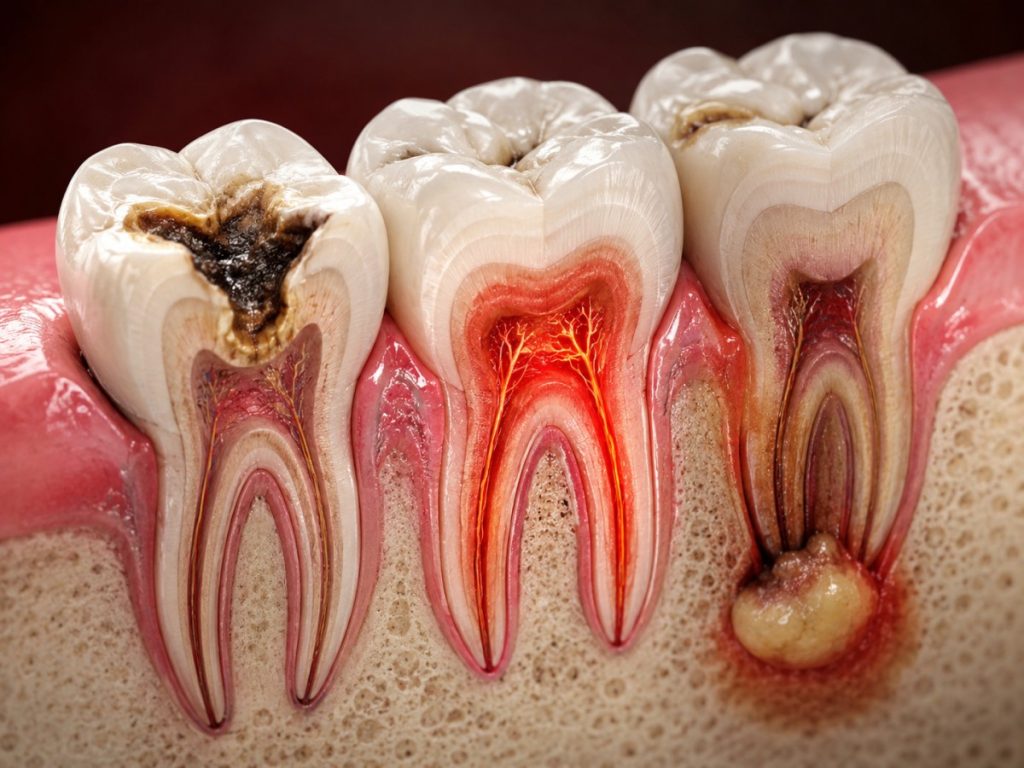
Severe toothache can develop from problems involving the dental pulp, tooth structure, surrounding gums or supporting tissues. Different conditions can produce similar symptoms, which is why examination is necessary.
Deep Tooth Decay
Deep tooth decay can cause severe tooth pain when bacteria and their by-products reach tissues closer to or within the dental pulp.
Early decay may cause few noticeable symptoms. As the cavity becomes deeper, sensitivity to sweet, cold or hot foods may develop.
If the dental pulp becomes significantly inflamed, pain can become spontaneous or persist after the original stimulus has been removed.
A dentist must assess the depth of the decay and the condition of the pulp to determine whether the tooth can be restored directly or requires additional treatment.
Inflamed Dental Pulp
The dental pulp is the soft tissue inside a tooth containing nerves, blood vessels and connective tissue. Pulp inflammation is known as pulpitis.
Mild inflammation may sometimes be reversible when its cause is treated early.
More extensive inflammation may become irreversible, meaning the pulp cannot predictably recover.
Symptoms can include spontaneous pain, prolonged temperature sensitivity and pain that becomes difficult to localise.
When irreversible pulp inflammation is diagnosed and the tooth remains restorable, root canal treatment may be considered to preserve the tooth.
Tooth Infection
A tooth infection can develop when bacteria enter the pulp through deep decay, a crack, trauma or another pathway.
As infection progresses through the root canal system, inflammation can develop around the end of the root.
Symptoms vary considerably.
Some infected teeth cause severe pain, while others may initially produce limited symptoms. Pain when biting, gum swelling or a dental abscess can develop as the condition progresses.
An infected tooth requires assessment of whether it can be preserved through endodontic treatment or whether another treatment is appropriate.
Dental Abscess
A dental abscess is a localised collection of pus associated with bacterial infection.
An abscess involving a tooth may produce severe throbbing pain, tenderness, swelling or an unpleasant taste if drainage occurs.
The affected tooth can also become painful when biting.
A dental abscess should be assessed promptly because treatment needs to address the source of infection.
Depending on the diagnosis, treatment can involve root canal therapy, drainage or extraction.
Antibiotics may be appropriate in selected circumstances but are not a substitute for definitive treatment of the source when dental intervention is required.
Cracked Tooth
A cracked tooth can cause sharp or intermittent tooth pain, particularly when chewing.
One characteristic symptom can be discomfort when biting down or when pressure is released.
Cracks vary in depth and location.
A superficial crack may not affect the dental pulp, while a deeper fracture can cause pulpal inflammation or infection.
Treatment can range from restoration or a dental crown to root canal treatment when the pulp is involved.
A severe crack extending into an unfavourable area can make the tooth difficult or impossible to preserve.
Broken Tooth
A broken tooth can cause emergency tooth pain when deeper layers of the tooth become exposed.
A small enamel chip may produce little or no discomfort.
A substantial fracture can expose dentine or the dental pulp, leading to sensitivity or severe pain.
Dental trauma is one possible cause, but weakened teeth can also fracture during normal chewing.
Treatment depends on the amount of tooth structure lost and whether the pulp or root has been affected.
Dental Trauma
Dental trauma can damage the pulp even when there is no obvious large fracture.
A direct impact can loosen or displace a tooth, fracture its root or disrupt its blood supply.
Pain may develop immediately or appear later.
Teeth affected by trauma can therefore require monitoring even when the initial symptoms seem manageable.
Significant dental trauma should receive prompt assessment because early management may influence the ability to preserve the affected tooth.
When Tooth Pain Is an Emergency
Tooth pain becomes more urgent when its severity, duration or associated symptoms suggest significant pulpal disease, infection or structural damage.
A mild toothache should still be investigated, but certain symptoms warrant more prompt attention.
Pain That Prevents Sleep or Normal Activities
Severe pain that repeatedly wakes you from sleep or makes eating and normal daily activities difficult warrants prompt assessment.
This level of pain can occur when the dental pulp is significantly inflamed.
Temporary improvement after taking pain medication does not confirm that the underlying problem has resolved.
If the pain repeatedly returns, professional diagnosis is needed.
Persistent Throbbing Tooth Pain
Persistent throbbing pain can occur with significant inflammation or infection.
The pain may feel continuous or come in strong episodes.
Throbbing alone cannot establish the diagnosis, but persistent symptoms should not be ignored.
The dentist may need to assess pulp vitality and take dental X-rays to identify the cause.
Severe Pain When Biting
Pain when biting can be associated with several dental problems, including a cracked tooth, infection around a tooth root or problems with an existing restoration.
The location and timing of the pain can provide diagnostic clues.
For example, a cracked tooth may sometimes produce a sharp sensation as biting pressure is released.
Because continued chewing may worsen some fractures, a painful tooth should be protected from unnecessary loading until it has been assessed.
Toothache With Swollen Gums

Swollen gums near a painful tooth can indicate local inflammation or infection.
A small swelling or pimple-like area on the gum can sometimes be associated with drainage from a dental infection.
The absence of severe pain does not necessarily mean an infection is harmless.
Some infections can drain through the gum and temporarily produce fewer symptoms while the source remains untreated.
Toothache With Facial Swelling
Tooth pain accompanied by facial swelling requires prompt professional assessment because infection may have spread beyond the immediate tooth.
The urgency increases when swelling is rapidly enlarging or extends towards the jaw or neck.
Difficulty breathing or swallowing associated with facial or neck swelling requires emergency medical attention.
This situation should not wait for a routine dental appointment.
Toothache With Fever or Feeling Unwell
A suspected dental infection accompanied by fever or systemic illness requires prompt assessment.
These symptoms can suggest that the problem is no longer confined to a small local area.
The dentist needs to determine the dental source and whether additional medical management is required.
Patients should communicate systemic symptoms when arranging emergency dental care.
When Severe Toothache May Need an Endodontist
An endodontist is a dentist with specialist training in diagnosing and treating conditions affecting the dental pulp and tissues around tooth roots.
Some severe toothaches can be managed by a general dentist, while more complex endodontic problems may warrant specialist assessment.
An endodontist may be involved when diagnosis is difficult, root canal anatomy is complex, previous root canal treatment has failed or the tooth has sustained certain types of trauma.
Specialist assessment does not automatically mean root canal treatment will be required.
The first objective is still to establish the source of the pain and determine whether the tooth can and should be preserved.
Immediate Steps to Take for Severe Toothache
Immediate measures for severe toothache should focus on protecting the affected tooth and obtaining appropriate professional care.
Home measures may help temporarily but should not delay diagnosis when symptoms are severe.
1. Arrange a Dental Assessment
Contact a dentist and describe the severity and duration of the pain as well as any swelling, fever or trauma. Providing these details can help the clinic assess urgency.
2. Avoid Chewing on the Painful Tooth
Reducing pressure on the affected side may help when pain is associated with a crack, fracture or inflammation around the root. Choose foods that can be eaten comfortably until the tooth is assessed.
3. Keep the Mouth Clean
Continue gentle oral hygiene unless the treating clinician advises otherwise. Plaque and trapped food can aggravate gum inflammation around a painful area. Avoid aggressive brushing directly over severely swollen or injured tissues.
4. Use Pain Relief Appropriately
Over-the-counter pain medication may temporarily help some patients when used according to the product instructions and when medically suitable for them. Pain relief does not treat decay, infected pulp, cracks or abscesses. Repeatedly masking severe pain without seeking treatment can allow the underlying condition to progress.
What Should You Avoid Doing?
Some home approaches can damage oral tissues or delay appropriate treatment.
Do not place aspirin directly against the tooth or gum because this can irritate or injure the soft tissues.
Do not attempt to puncture or drain a dental abscess yourself.
Household adhesives should not be used to repair broken teeth or restorations.
Most importantly, do not assume that disappearing pain means an infected tooth has healed.
Changes within the dental pulp can sometimes cause symptoms to decrease even while the underlying disease remains.
How an Emergency Dentist Diagnoses Severe Tooth Pain
Diagnosing severe tooth pain requires determining which tooth or tissue is responsible and what biological or structural problem is present.
The dentist begins by discussing the pain pattern.
Useful information includes whether pain occurs spontaneously, whether temperature triggers it, how long it lasts and whether biting makes it worse.
The clinical examination may look for decay, cracks, swelling, damaged restorations and gum problems.
Pulp tests can provide information about how the tissue inside the tooth responds to stimuli.
Dental X-rays may reveal deep decay, previous treatment and changes around tooth roots.
No single symptom or test should necessarily be interpreted in isolation. Diagnosis usually comes from combining the history, examination and relevant investigations.
Treatment Options for Severe Toothache
Treatment for severe toothache depends entirely on its cause. Controlling pain is important, but definitive treatment should address the underlying dental condition.
Dental Restoration
A filling or other restoration may be appropriate when pain results from a dental defect that has not irreversibly damaged the pulp.
The damaged or decayed tissue is treated and the tooth is restored.
Whether this is sufficient depends on the depth of the problem and the condition of the pulp.
Root Canal Treatment
Root canal treatment may be recommended when the dental pulp is irreversibly inflamed or infected and the tooth remains suitable for preservation.
During treatment, diseased or infected tissue is removed from inside the tooth.
The root canal system is then cleaned, disinfected and sealed.
Depending on the tooth and amount of remaining structure, an appropriate restoration such as a dental crown may subsequently be needed.
Management of a Dental Abscess
Treatment for a dental abscess aims to eliminate the source of infection.
This may involve root canal treatment when the tooth can be preserved or extraction when it cannot.
Drainage may also be appropriate in selected circumstances.
Antibiotics are not automatically required for every toothache or abscess. Their use depends on the clinical presentation, including whether infection is spreading or producing systemic symptoms.
Cracked Tooth Treatment
Cracked tooth treatment depends on the location and depth of the fracture.
A tooth with a manageable crack may require restorative protection, such as a crown.
Root canal treatment may also be necessary when the crack has caused irreversible pulpal inflammation or infection.
A fracture extending through critical parts of the tooth may significantly reduce its restorability.
Tooth Extraction
Extraction may be considered when a tooth is too severely damaged or compromised to be predictably restored.
Severe pain alone is not a reason to automatically remove a tooth.
The dentist should first assess whether preservation is feasible through appropriate restorative or endodontic treatment.
Can Severe Toothache Go Away Without Treatment?
Severe toothache can temporarily decrease, but this does not necessarily mean the underlying dental problem has resolved.
Pain caused by minor irritation may improve if the cause is reversible.
However, severe pain related to pulp disease or infection may change as the condition progresses.
For example, symptoms can decrease when pulp tissue loses vitality, even though bacteria remain within the root canal system.
This is why a significant toothache should be diagnosed rather than monitored solely according to whether the pain becomes stronger or weaker.
Frequently Asked Questions (FAQs)
Is severe toothache considered a dental emergency?
Severe, persistent or rapidly worsening toothache can be a dental emergency, particularly when it affects sleep or eating or is accompanied by swelling, fever or trauma. Prompt assessment can determine the cause and required treatment.
When should I go to an emergency dentist for tooth pain?
Seek urgent dental care when pain is severe, persistent or worsening, particularly if there is facial swelling, a dental abscess, fever, significant trauma or difficulty functioning normally.
Does throbbing tooth pain mean I need a root canal?
Not automatically. Throbbing pain can be associated with pulpal inflammation or infection, but diagnosis requires clinical examination and appropriate testing. Root canal treatment is recommended only when the findings support it.
Can a tooth infection cause severe pain?
Yes. Infection involving the dental pulp or tissues around the tooth root can produce severe pain, tenderness and swelling. Some infected teeth can also have relatively mild symptoms, so pain intensity alone does not determine whether infection is present.
Will antibiotics stop emergency tooth pain?
Antibiotics are not a general treatment for toothache and may not be indicated when infection is confined to the tooth. Definitive dental treatment is often necessary to address the source of the problem.
Should I visit a hospital for a severe toothache?
Most isolated toothaches are appropriately assessed by a dentist. Emergency medical care is necessary when symptoms include significant facial or neck swelling affecting breathing or swallowing, uncontrolled bleeding or another potentially serious medical complication.
Can severe tooth pain disappear on its own?
Pain may temporarily improve even when the underlying problem remains. A significant toothache should therefore be assessed rather than assuming that reduced pain confirms healing.
Severe Tooth Pain Deserves a Diagnosis, Not Just Pain Relief
A severe toothache can result from deep decay, an inflamed or infected dental pulp, a dental abscess, a cracked tooth or dental trauma. The symptoms can overlap, making professional diagnosis necessary before appropriate treatment can be selected.
Emergency tooth pain becomes particularly concerning when it is persistent, rapidly worsening or accompanied by facial swelling, fever or significant trauma.
Treatment may range from restoration to root canal therapy, management of infection or extraction when the tooth cannot be preserved. Addressing the cause rather than repeatedly suppressing the pain provides the basis for resolving the dental problem.
Find the Cause of Persistent or Severe Tooth Pain
If severe toothache is persistent, worsening or accompanied by swelling or other concerning symptoms, book a consultation with Dr. Seah’s Root Canal Clinic. An assessment can identify whether the pain is related to the dental pulp, infection, a cracked tooth or another condition and determine the appropriate emergency dental treatment.
