
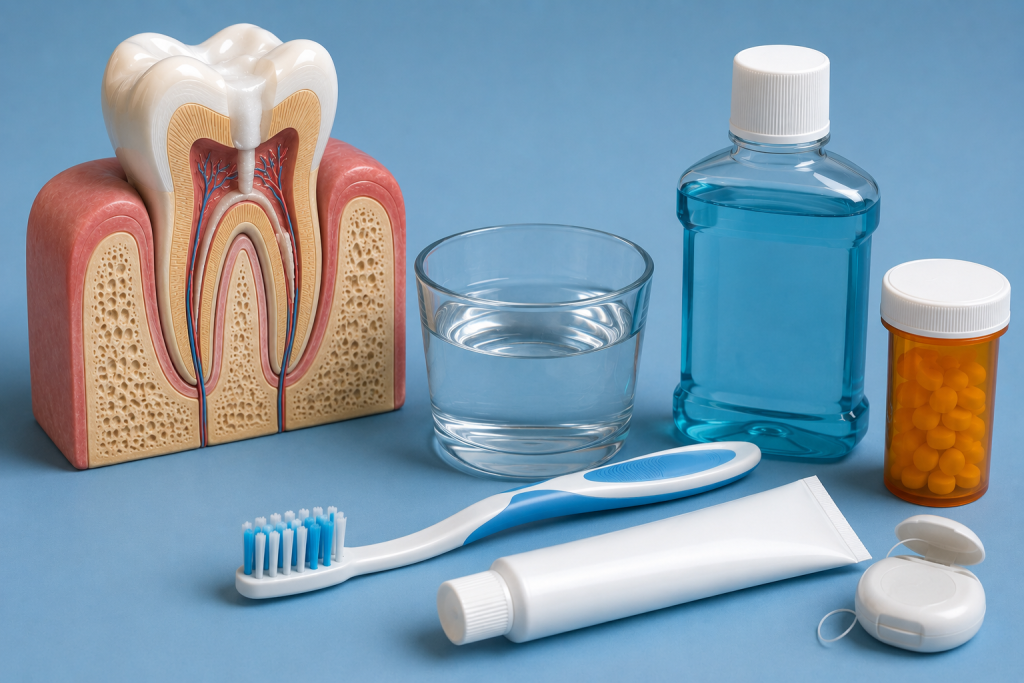
Root Canal Aftercare at a Glance
Appropriate aftercare for a root canal refers to the steps taken after root canal treatment to support healing, prevent infection, and protect the treated tooth from damage. Proper root canal aftercare includes maintaining good oral hygiene, avoiding hard foods, taking medications as prescribed, attending follow-up appointments, and completing any recommended dental crown treatment. Following these instructions can significantly improve the long-term success of root canal treatment.
Key Takeaways
- Avoid hard, crunchy, or sticky foods after a root canal.
- Continue brushing and flossing gently around the treated tooth.
- Attend all follow-up appointments.
- Complete any prescribed medications.
- Do not delay permanent crown placement if recommended.
- Watch for signs of infection such as swelling, fever, or worsening pain.
- Contact your dentist if symptoms worsen rather than improve.
What Is a Root Canal?
A root canal is a dental procedure used to treat infection or inflammation within the dental pulp, the soft tissue inside a tooth that contains nerves and blood vessels. During root canal treatment, an endodontist in Singapore may remove the infected pulp, clean and disinfect the root canal system, and seal the space to prevent reinfection.
Root canal treatment allows patients to preserve their natural tooth rather than having it extracted.
Common reasons a patient may require a root canal include:
- Deep tooth decay
- Cracked or fractured teeth
- Dental trauma
- Repeated dental procedures on the same tooth
- Severe tooth infection
- Dental abscess formation
Why Root Canal Aftercare Matters
Although the infection has been removed, the tooth and surrounding tissues still need time to heal. Proper root canal aftercare helps reduce discomfort, prevent complications, and improve long-term outcomes.
Benefits of proper aftercare include:
- Reduced inflammation
- Faster recovery
- Lower risk of reinfection
- Better protection against tooth fractures
- Improved long-term tooth survival
- Reduced likelihood of retreatment
A root canal-treated tooth can often last for many years when properly restored and maintained.
Typical Root Canal Recovery Timeline
Many patients want to know how long root canal recovery takes.
The healing process varies depending on the severity of the infection, the tooth involved, and the patient’s overall health.
| Recovery Period | What to Expect |
| First 24 Hours | Mild soreness, tenderness when biting, numbness wearing off |
| Days 2–3 | Symptoms begin improving significantly |
| Days 4–7 | Most discomfort resolves |
| Weeks 2–4 | Surrounding tissues continue healing |
| After Permanent Restoration | Full function is typically restored |
Most patients can return to work, school, and normal daily activities within a day after treatment.
Common Symptoms After a Root Canal
Understanding normal symptoms can help patients distinguish between expected healing and potential complications.
Normal Symptoms After a Root Canal
The following are generally considered normal:
- Mild soreness
- Tenderness when chewing
- Slight gum sensitivity
- Temporary jaw discomfort
- Mild inflammation around the treated tooth
These symptoms typically improve within several days.
Abnormal Symptoms After a Root Canal
Contact your dentist if you experience:
- Severe or worsening pain
- Significant facial swelling
- Fever
- Difficulty swallowing
- Persistent bad taste in the mouth
- Pus discharge
- A cracked temporary filling
- A fractured tooth
These symptoms may indicate infection or another complication requiring professional treatment.
What Are the Most Common Root Canal Aftercare Mistakes?
The most common root canal aftercare mistakes include eating hard foods too soon, skipping oral hygiene, delaying crown placement, missing follow-up appointments, stopping medications early, smoking during recovery, and ignoring warning signs of infection. These mistakes can increase the risk of complications and compromise the success of root canal treatment.
10 Root Canal Aftercare Mistakes to Avoid
1. Skipping Proper Oral Hygiene
Some patients avoid brushing near the treated tooth because they worry about causing damage.
Why it is a problem:
Bacteria can still accumulate around the tooth and gums, increasing the risk of gum disease and recurrent infection.
What to do instead:
- Brush twice daily
- Floss gently
- Follow your dentist’s oral hygiene instructions
- Consider saltwater rinses if recommended
2. Eating Hard or Sticky Foods Too Soon
A root canal-treated tooth may remain vulnerable before permanent restoration.
Why it is a problem:
Hard foods can crack the tooth or dislodge temporary fillings.
What to do instead:
Choose softer foods during the initial healing period.
Examples include:
- Soup
- Yogurt
- Oatmeal
- Rice
- Scrambled eggs
- Soft fish
- Mashed potatoes
3. Chewing on the Treated Tooth Too Early
Even if discomfort is minimal, excessive pressure can damage the temporary restoration.
What to do instead:
Use the opposite side of your mouth when chewing until your dentist confirms the tooth is fully restored.
4. Ignoring Follow-Up Appointments
Root canal treatment often involves multiple stages.
Skipping appointments may delay crown placement and increase the risk of complications.
5. Delaying a Permanent Crown
Many back teeth require a dental crown after root canal treatment.
Why it is a problem:
Without a crown, the tooth is more susceptible to fracture during normal chewing.
6. Returning to Intense Physical Activity Too Quickly
Heavy exercise immediately after treatment may increase discomfort and swelling.
Consider resting for the first 24 hours before returning to strenuous activity.
7. Stopping Prescribed Medication Early
Antibiotics and prescribed medications should be taken exactly as directed.
Stopping treatment early may allow infection to persist.
8. Smoking During Recovery
Smoking may reduce blood flow and slow healing.
Patients who smoke may experience delayed recovery and increased risk of complications.
9. Ignoring Persistent Symptoms
Pain that worsens rather than improves should never be ignored.
Persistent symptoms may indicate:
- Reinfection
- Tooth fracture
- Bite problems
- Residual inflammation
10. Assuming the Tooth Can Never Develop Problems Again
A root canal removes infected pulp, but the tooth can still develop:
- Decay
- Gum disease
- Cracks
- Restoration failure
Regular dental check-ups remain important.
What Can You Do After a Root Canal?
Many patients have practical questions about daily activities after root canal treatment.
Can I Eat After a Root Canal?
Yes. Once numbness has worn off, you may eat soft foods. Avoid hard, crunchy, or sticky foods until the tooth is fully restored.
Can I Brush My Teeth After a Root Canal?
Yes. Continue brushing and flossing normally while being gentle around the treated area.
Can I Drink Coffee After a Root Canal?
Most patients can drink coffee once numbness has worn off. However, extremely hot beverages may temporarily increase sensitivity.
Can I Smoke After a Root Canal?
Smoking is not recommended because it may delay healing and increase the risk of complications.
Can I Exercise After a Root Canal?
Light activities are generally acceptable. Intense exercise should be avoided for at least 24 hours.
Can I Drive After a Root Canal?
Most patients can drive home after treatment unless sedation has been used.
Foods to Eat and Avoid After a Root Canal
Recommended Foods
Choose foods that are easy to chew and unlikely to stress the treated tooth.
Examples include:
- Yogurt
- Soup
- Oatmeal
- Rice
- Noodles
- Soft fruits
- Mashed vegetables
- Eggs
- Pasta
- Smoothies
Foods to Avoid
Avoid foods that can damage temporary restorations.
Examples include:
- Ice
- Nuts
- Popcorn
- Hard sweets
- Chewing gum
- Sticky candies
- Tough meat
- Crunchy chips
What Happens If You Ignore Root Canal Aftercare Instructions?

Ignoring root canal aftercare instructions may increase the risk of infection, tooth fracture, prolonged discomfort, restoration failure, and the need for retreatment or extraction.
Potential consequences include:
- Delayed healing
- Crown failure
- Recurrent infection
- Tooth loss
- Additional treatment costs
Following your dentist’s recommendations is one of the most effective ways to protect your investment in treatment.
Why Do Root Canals Fail?
Root canal treatment has a high success rate, but failures can occasionally occur.
Common causes include:
- Delayed crown placement
- Cracked teeth
- New decay
- Missed root canals
- Reinfection
- Poor oral hygiene
- Restoration failure
When problems occur, retreatment or endodontic surgery may sometimes be recommended.
How Successful Is Root Canal Treatment?
Root canal treatment is considered one of the most predictable procedures in modern dentistry. Studies have reported success rates ranging from approximately 85% to over 95%, particularly when the tooth receives appropriate restoration and ongoing dental care.
The long-term success of root canal treatment depends on:
- Thorough infection removal
- Quality restoration
- Good oral hygiene
- Regular dental examinations
- Prompt management of new dental issues
Root Canal Aftercare vs Wisdom Tooth Extraction Aftercare
Although both procedures require healing, their aftercare requirements differ.
| Factor | Root Canal | Wisdom Tooth Extraction |
| Goal | Save the natural tooth | Remove the tooth |
| Main Concern | Protect treated tooth | Protect blood clot |
| Common Risk | Fracture or reinfection | Dry socket |
| Crown Needed | Often yes | No |
| Recovery Focus | Tooth preservation | Socket healing |
Both procedures benefit from:
- Good oral hygiene
- Following instructions
- Appropriate diet choices
- Follow-up care
Tips for Long-Term Success After Root Canal Treatment
To maximise the lifespan of a root canal-treated tooth:
- Brush twice daily
- Floss regularly
- Attend routine dental examinations
- Wear a night guard if you grind your teeth
- Avoid using teeth as tools
- Complete permanent crown placement
- Have regular dental x-rays when recommended
- Seek treatment promptly for new symptoms
Frequently Asked Questions (FAQs)
How long does pain last after a root canal?
Most patients experience mild discomfort for several days. Symptoms should gradually improve rather than worsen.
Can a root canal tooth get infected again?
Yes. Reinfection can occur if new decay develops, a restoration fails, or bacteria enter the tooth through cracks or leakage.
Do I need a crown after a root canal?
Many root canal-treated teeth, especially molars, benefit from a permanent crown to restore strength and reduce fracture risk.
Why does my tooth still hurt after a root canal?
Mild soreness is common during healing. Persistent or worsening pain should be evaluated by your dentist.
Can a root canal fail?
Although uncommon, root canal failure can occur due to reinfection, tooth fractures, missed canals, or restoration problems.
Can I brush my teeth after a root canal?
Yes. Good oral hygiene remains important and helps reduce the risk of future complications.
What foods should I avoid after a root canal?
Avoid hard, sticky, crunchy, or chewy foods until the tooth is fully restored.
When should I contact a dentist after a root canal?
Seek professional advice if you develop severe pain, swelling, fever, difficulty swallowing, or worsening symptoms.
Protect Your Tooth After Root Canal Treatment

Recovering from a root canal is usually straightforward, but every patient and every tooth is different. If you are experiencing persistent discomfort, swelling, sensitivity that is not improving, or have questions about your recovery, it is important to seek professional advice rather than waiting for symptoms to worsen.
At Dr. Seah Root Canal + Surgical Implant Clinic, we provide comprehensive assessment, root canal treatment, endodontic care, and post-treatment follow-up to help patients protect their natural teeth and achieve long-term oral health.
Whether you need guidance on root canal aftercare, a second opinion on a previously treated tooth, or evaluation of ongoing symptoms, our team can help determine the most appropriate next steps for your situation. Please contact our team today to set up a consultation.