

Knowing how to care for a dental bridge is important because the restoration depends on the continued health of its supporting teeth and surrounding gums. Although the artificial tooth in a bridge cannot develop tooth decay, plaque can accumulate around the bridge margins and underneath the replacement tooth, potentially affecting the natural teeth and gum tissues.
Dental bridge care therefore involves more than regular brushing. The area underneath the artificial tooth, known as the pontic, needs to be cleaned using suitable techniques because ordinary floss cannot pass vertically between the connected units of a fixed bridge.
Daily oral hygiene, appropriate cleaning aids, sensible chewing habits and regular professional dental care can help maintain a dental bridge. These measures cannot guarantee that a bridge will never require repair or replacement, but they can reduce preventable problems that may affect its function and longevity.
Key Takeaways
Effective dental bridge maintenance focuses on protecting the restoration, supporting teeth and surrounding gums rather than cleaning only the visible surface.
Important care principles include:
- Brush the bridge and natural teeth thoroughly at least twice daily.
- Clean underneath the pontic every day using an appropriate interdental method.
- Pay particular attention to the margins where the bridge meets natural teeth.
- Avoid repeatedly biting extremely hard foods or non-food objects.
- Have persistent teeth grinding or clenching assessed.
- Attend regular dental examinations and professional cleaning.
- Seek dental assessment if the bridge becomes loose, painful or damaged.
A dental bridge can only remain functional when both the restoration and the structures supporting it remain healthy.
Why Proper Dental Bridge Care Matters
Proper dental bridge care matters because the natural teeth supporting a conventional bridge remain susceptible to tooth decay and gum disease. A problem affecting one abutment tooth can compromise the stability of the wider restoration.
A traditional fixed dental bridge commonly consists of an artificial replacement tooth supported by crowns placed over neighbouring natural teeth. These supporting teeth are known as abutments.
Plaque can accumulate around the crown margins where the restoration meets natural tooth structure. Food debris and bacteria can also collect underneath the pontic if the area is not cleaned adequately.
Over time, inadequate plaque control may contribute to inflammation of the surrounding gums or decay affecting the supporting teeth.
Good oral hygiene therefore helps protect more than the bridge itself. It supports the biological foundation on which the restoration depends.
Understand the Areas That Need Cleaning
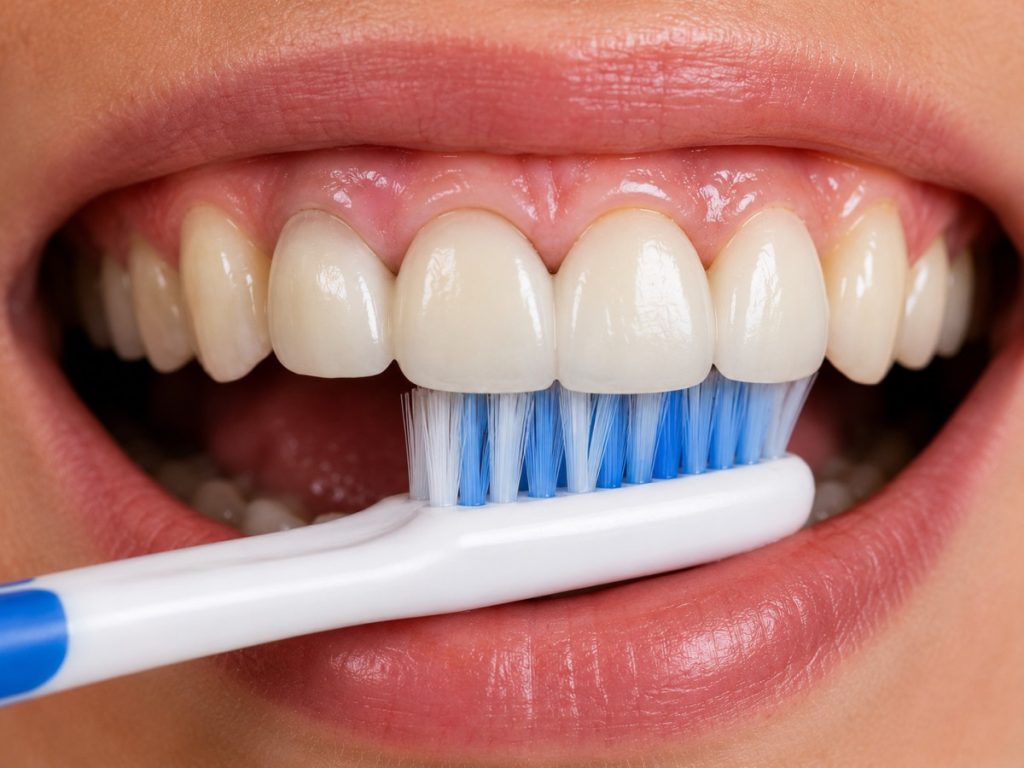
A dental bridge contains several areas that require slightly different cleaning techniques. Brushing alone may clean the visible surfaces effectively but cannot always reach underneath the connected artificial tooth.
The main areas requiring attention are:
- Visible Bridge Surfaces: These are cleaned similarly to natural teeth.
- Crown Margins: These are the areas where the restoration meets the supporting natural teeth.
- Under the Pontic: This space requires a cleaning aid that can pass beneath the bridge.
- Between Neighbouring Teeth: These areas require appropriate interdental cleaning.
- Gumline: Plaque should be removed carefully where the bridge and natural teeth meet the gums.
Understanding these areas makes it easier to develop a daily cleaning routine that addresses the complete restoration.
Daily Cleaning Routine for a Dental Bridge
Daily dental bridge cleaning should combine toothbrushing with an appropriate method for cleaning beneath and around the fixed restoration.
A consistent routine is generally more useful than occasional intensive cleaning.
Brush the Bridge Twice Daily
Brushing removes plaque from the visible surfaces of the bridge, natural teeth and gumline. The brush should reach the margins around the crowns supporting the bridge.
Use gentle, controlled movements rather than aggressive scrubbing.
Brushing too forcefully does not necessarily clean more effectively and may contribute to gum irritation or recession over time.
The aim is to clean all accessible surfaces systematically, including areas where the bridge joins the natural teeth.
An electric or manual toothbrush can be used effectively when the technique allows plaque to be removed from the relevant areas.
Clean Under the Dental Bridge Every Day
Cleaning underneath the pontic is one of the most important differences between caring for a dental bridge and caring for individual natural teeth.
A conventional piece of floss normally cannot pass vertically through the space between connected bridge units.
Instead, the cleaning material needs to be guided underneath the artificial tooth from the side.
Food debris and plaque can otherwise remain in this area even when the visible surface of the bridge looks clean.
Several dental bridge cleaning methods are available, and the most appropriate one depends on the shape of the restoration and the space underneath it.
How to Use a Floss Threader
A floss threader helps guide dental floss underneath a fixed dental bridge. It works by providing a firm end that can be passed beneath the pontic before the floss is drawn through.
Once positioned, the floss can be moved carefully along the underside of the bridge and around the supporting teeth.
The objective is to remove plaque rather than force the floss aggressively against the gums.
A basic routine may involve:
- Threading floss through the floss threader.
- Passing the threader beneath the bridge.
- Pulling the floss gently through.
- Cleaning underneath the pontic and around the adjacent abutment surfaces.
- Removing the floss carefully from the side.
Patients who are unsure of the technique can ask their dentist or dental hygienist to demonstrate it.
Using Interdental Brushes Around a Bridge
An interdental brush is a small brush designed to clean spaces that a conventional toothbrush cannot easily reach. Depending on the bridge design and available space, it may be useful for cleaning beneath or around the restoration.
The brush should fit the space without requiring excessive force.
A brush that is too small may not clean effectively, while one that is too large can be uncomfortable or difficult to insert.
The appropriate size can vary between different areas of the mouth.
Interdental brushes can be particularly useful where there is sufficient space beneath the pontic or around the supporting teeth.
Patients should follow individual recommendations because not every bridge has the same contours.
Pay Attention to the Crown Margins
The crown margins deserve particular attention because they represent the transition between the artificial restoration and natural tooth structure.
Plaque accumulating in this area can contribute to gum inflammation and tooth decay.
The crown itself cannot develop decay, but the tooth underneath and around its margin can.
Decay affecting an abutment tooth may be difficult to manage without removing or replacing part of the bridge.
Daily plaque removal around these margins is therefore an important part of protecting the supporting teeth.
If the gums around a bridge repeatedly bleed during cleaning, remain swollen or become uncomfortable, dental assessment may be appropriate.
Foods and Habits to Avoid
A dental bridge is designed for normal function, so patients generally do not need to avoid ordinary foods permanently. However, repeated exposure to excessive or unusual forces can increase the risk of damage.
Particularly hard foods can place concentrated pressure on restorative materials.
Patients should also avoid using the bridge or natural teeth for activities unrelated to eating.
Habits that can unnecessarily stress a bridge include:
- Chewing ice or very hard objects.
- Biting pens, packaging or other non-food items.
- Using teeth to open containers.
- Repeatedly chewing extremely hard sweets.
- Ignoring persistent grinding or clenching.
The objective is not to restrict normal eating unnecessarily. It is to avoid preventable forces that provide no functional benefit and may damage the restoration.
Be Careful With Sticky Foods if the Bridge Is Temporary
Temporary bridges require additional care because they are designed for short-term protection while a definitive restoration is being prepared.
Very sticky foods can potentially pull on a temporary restoration and contribute to loosening.
Hard foods can also fracture temporary materials.
Patients with a temporary bridge should follow the specific dietary and cleaning instructions provided by their dentist.
A permanent bridge is designed for longer-term function, but sensible chewing habits remain appropriate.
If either a temporary or permanent bridge becomes loose, it should be professionally assessed rather than secured using household adhesive.
Manage Teeth Grinding and Clenching
Teeth grinding or clenching can place repeated excessive forces on dental bridges and natural teeth. This condition is commonly referred to as bruxism.
Some people grind their teeth during sleep without being aware of it.
Possible signs can include worn teeth, jaw muscle discomfort, morning jaw tension or damage to existing dental restorations.
A bridge exposed to substantial grinding forces may experience increased wear or fracture risk.
If bruxism is suspected, dental assessment can help determine whether management is appropriate.
Simply replacing a damaged restoration without considering persistent excessive biting forces may expose the new bridge to the same mechanical problem.
Professional Maintenance of a Dental Bridge
Professional dental maintenance allows the bridge, abutment teeth and surrounding gums to be assessed in areas that patients cannot fully evaluate themselves.
A bridge can appear normal while early changes develop around its margins or supporting structures.
During a dental examination, the dentist may assess the stability of the bridge, condition of the gums and health of the abutment teeth.
Dental imaging may be recommended when clinically necessary to examine areas that cannot be directly seen.
Professional cleaning can also remove deposits that remain despite regular home care.
The frequency of examinations and cleaning should reflect individual oral health needs rather than assuming that every patient requires exactly the same schedule.
Signs Your Dental Bridge Needs Professional Assessment
Changes in how a bridge feels or functions should be assessed because they may indicate a problem with the restoration or supporting teeth.
A dental examination is particularly appropriate if you notice:
- Movement or looseness of the bridge.
- New pain when chewing.
- Persistent sensitivity around an abutment tooth.
- Visible cracks or chips.
- Recurrent gum swelling or bleeding.
- An unpleasant taste or odour around the bridge.
These symptoms do not necessarily mean that the bridge needs replacement.
A loose bridge, for example, may sometimes be recemented if it remains structurally sound and the underlying teeth are healthy.
Early assessment provides an opportunity to identify the cause before additional damage develops.
What Happens if Decay Develops Under a Bridge?
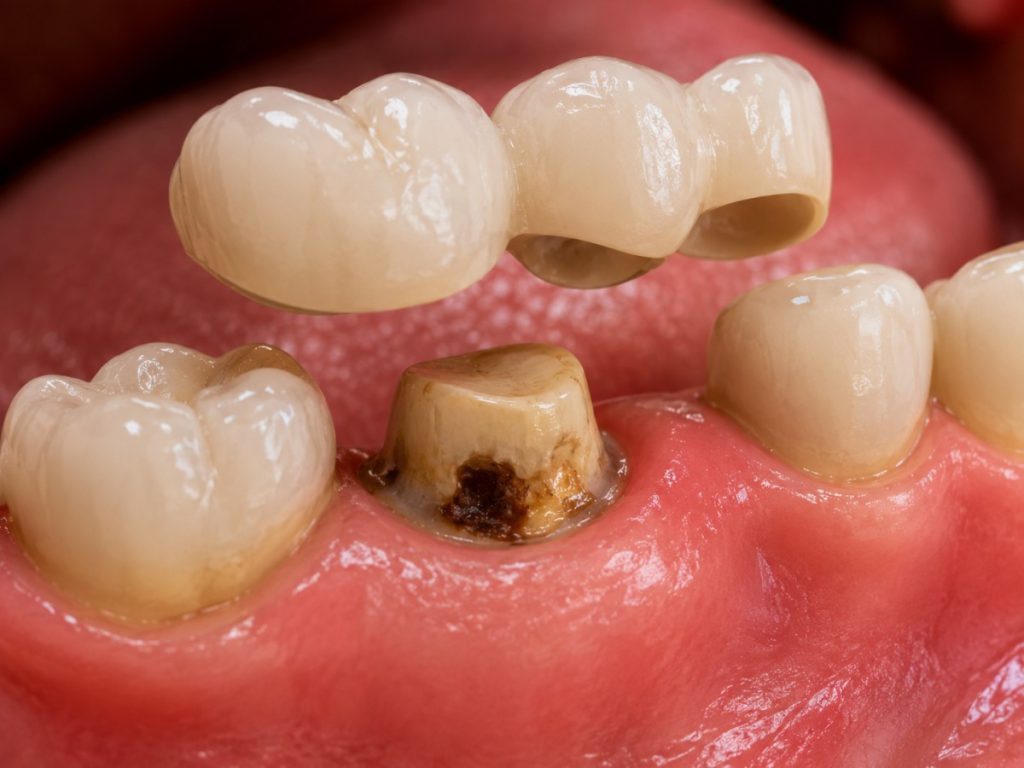
Decay underneath or around a dental bridge affects the natural supporting tooth rather than the artificial restoration. Treatment depends on the extent of the decay and whether the abutment remains suitable for supporting the bridge.
The bridge may need to be removed when adequate access to the damaged tooth is required.
After the decay is treated, the dentist determines whether the existing restoration can be reused or whether a replacement bridge is necessary.
Extensive decay can substantially weaken an abutment.
If the dental pulp has also become irreversibly inflamed or infected, root canal treatment may be considered when the tooth remains suitable for preservation.
This is one reason preventing decay around bridge margins is important for long-term maintenance.
Can a Dental Bridge Be Professionally Cleaned?
Yes. A dental bridge can and should be included in professional dental cleaning according to the patient’s oral health requirements.
Professional cleaning focuses on plaque and deposits around the bridge, natural teeth and gumline.
It does not replace daily cleaning underneath the pontic.
Home and professional care perform different roles. Daily cleaning controls plaque accumulation between appointments, while professional care allows areas that are difficult to manage at home to be assessed and cleaned when necessary.
The dental professional can also review whether the patient’s current flossing or interdental cleaning method is suitable for the bridge design.
How Dental Bridge Care Affects Its Lifespan
Dental bridge maintenance can influence longevity because biological problems affecting the abutment teeth are an important reason restorations eventually require treatment.
A bridge may remain structurally intact while a supporting tooth develops decay or periodontal problems.
Mechanical factors also matter.
Grinding, clenching, accidental trauma and repeated biting of hard objects can contribute to bridge wear or fracture.
Good care cannot guarantee a specific lifespan because dental restorations are affected by multiple biological and mechanical factors.
However, maintaining healthy supporting teeth and reducing avoidable stresses gives the restoration a better environment in which to continue functioning.
Frequently Asked Questions (FAQs)
How do you clean under a dental bridge?
The area underneath a fixed bridge can be cleaned using a floss threader, suitable interdental brush or another cleaning aid recommended by a dental professional. The objective is to remove plaque and food debris beneath the pontic and around the supporting teeth.
Can I use normal dental floss with a bridge?
Standard floss cannot normally pass vertically between connected bridge units. It may be used with a floss threader or another technique that allows the floss to pass underneath the restoration.
Should I brush a dental bridge like normal teeth?
Yes. The visible surfaces and crown margins should be brushed thoroughly as part of daily oral hygiene. Additional cleaning is needed beneath the artificial tooth because a toothbrush may not adequately reach this area.
Can food get stuck underneath a dental bridge?
Yes. Food debris can accumulate underneath the pontic depending on the bridge design and food being eaten. Regular cleaning beneath the bridge helps remove trapped debris and plaque.
Why do my gums bleed around my dental bridge?
Bleeding can occur when gum tissues are inflamed, commonly because of plaque accumulation. Persistent bleeding should be professionally assessed because other periodontal or restorative factors may also contribute.
What happens if I do not floss under my bridge?
Plaque and food debris can accumulate around the supporting teeth and gums. Over time, inadequate cleaning can contribute to gum inflammation and increase the risk of problems affecting the natural abutment teeth.
Can a dental bridge still develop cavities?
The artificial bridge material cannot develop tooth decay, but the natural teeth supporting the bridge can. Decay is particularly important around crown margins where natural tooth structure meets the restoration.
Protecting the Foundation of Your Dental Bridge
Caring for a dental bridge means protecting both the restoration and the natural structures supporting it. Brushing cleans the visible surfaces, while floss threaders, interdental brushes or other appropriate aids can help remove plaque beneath the artificial tooth.
Daily cleaning should be combined with sensible chewing habits and professional dental maintenance. Particular attention should be given to the crown margins and abutment teeth because decay or gum disease affecting these areas can compromise the wider bridge.
A dental bridge does not need complicated maintenance, but it does require consistent care. Keeping the supporting teeth and surrounding tissues healthy is one of the most important factors in maintaining a fixed bridge over time.
Keep Your Dental Bridge and Supporting Teeth in Good Condition
If you have difficulty cleaning your dental bridge, notice changes around the supporting teeth or experience looseness, discomfort or damage, book a consultation with Dr. Seah’s Root Canal Clinic. A dental assessment can check the bridge, abutment teeth and surrounding tissues and determine whether maintenance, repair or further treatment is appropriate.