

What Is Root Canal Treatment?
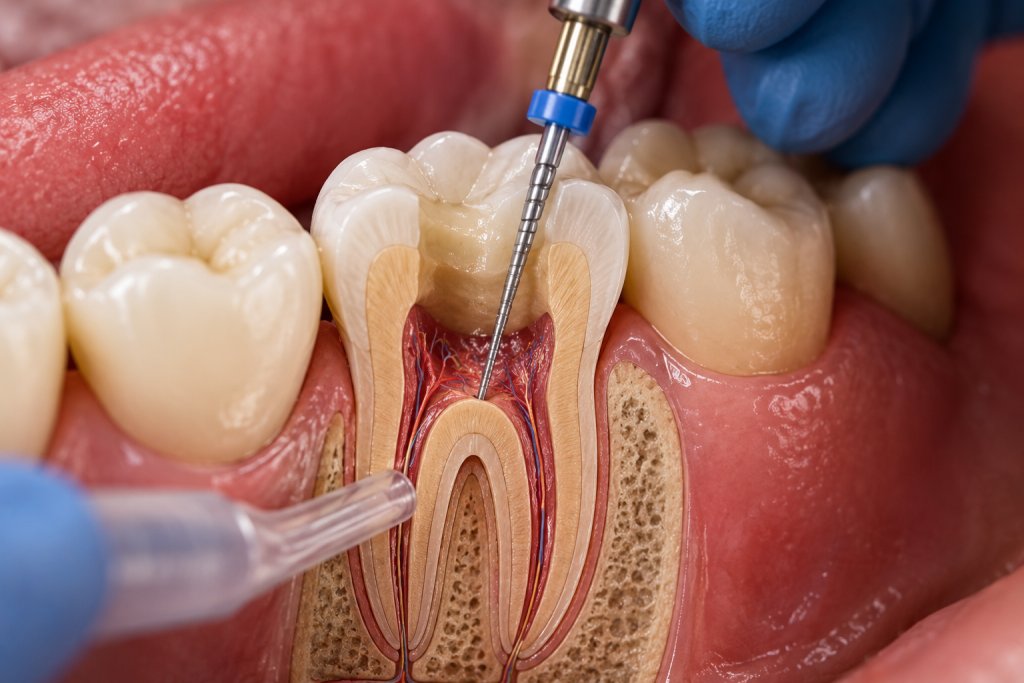
Treatment for a root canal is a procedure used to save a tooth that has an infected, inflamed, or damaged pulp. The pulp is the soft tissue inside the tooth that contains nerves, blood vessels, and connective tissue. When bacteria enter this area through deep decay, cracks, trauma, or repeated dental procedures, infection can develop and cause significant pain.
During root canal treatment, the infected pulp is removed, the root canals are cleaned and disinfected, and the tooth is sealed to prevent reinfection. The primary goal is to eliminate infection, relieve discomfort, and preserve the natural tooth whenever possible.
Modern root canal treatment is one of the most predictable and effective ways to treat a tooth infection while avoiding unnecessary tooth loss.
Root Canal Treatment at a Glance
| Question | Answer |
| What is root canal treatment? | A procedure that removes infected pulp and saves a natural tooth |
| Is root canal treatment painful? | Modern treatment is typically similar to a routine filling |
| How long does recovery take? | Most patients return to normal activities within 1–2 days |
| Can the tooth be saved? | In many cases, yes |
| What is the alternative? | Tooth extraction |
| Is a dental crown needed? | Often recommended for additional protection and strength |
| How successful is root canal treatment? | High long-term success when properly treated and restored |
Why Are There So Many Misconceptions About Root Canal Treatment?
Few dental procedures are surrounded by as many myths as root canal treatment. Much of the fear comes from outdated information, stories shared by others, or confusion between the pain caused by an infected tooth and the actual treatment used to address it.
In reality, advances in endodontic treatment, imaging technology, local anaesthesia, and treatment techniques have significantly improved patient comfort and outcomes.
Understanding the facts behind common misconceptions can help patients make informed decisions about preserving their oral health.
Myth 1: Root Canal Treatment Is Extremely Painful
The Reality
One of the most common myths is that root canal treatment causes severe pain. In reality, root canal treatment is designed to relieve pain caused by an infected or inflamed tooth pulp.
The discomfort many people associate with root canals is usually caused by the infection itself rather than the procedure. Modern local anaesthesia allows dentists to numb the affected area effectively, making treatment far more comfortable than many patients expect.
Most patients describe the experience as being similar to receiving a routine dental filling.
Why Pain Often Improves After Treatment
Once the infected tissue is removed:
- Pressure inside the tooth decreases
- Inflammation begins to settle
- Bacterial infection is eliminated
- Chewing discomfort gradually improves
For many patients, the procedure provides significant relief from symptoms that may have persisted for weeks or months.
Myth 2: It Is Better to Extract the Tooth Instead
The Reality
Many people assume extraction is the easier option. However, preserving a natural tooth is generally preferred whenever it is clinically possible.
Natural teeth provide important advantages that artificial replacements cannot completely replicate, including natural chewing efficiency, proper bite alignment, and preservation of surrounding bone.
Root Canal Treatment vs Tooth Extraction
| Factor | Root Canal Treatment | Tooth Extraction |
| Preserves natural tooth | Yes | No |
| Maintains normal chewing | Yes | May require replacement |
| Prevents shifting of nearby teeth | Yes | Not always |
| Additional restorative procedures | Usually a crown | Often implant, bridge, or denture |
| Jawbone preservation | Better | Bone loss may occur |
Why Saving a Tooth Matters
Keeping your natural tooth helps maintain:
- Proper bite function
- Jawbone health
- Natural appearance
- Long-term oral stability
This is why root canal treatment is often considered before extraction whenever the tooth can be restored successfully.
Myth 3: Root Canal Treatment Causes Illness
The Reality
Some patients still encounter claims suggesting root canal treatment causes illnesses elsewhere in the body. These concerns stem from outdated theories that have since been disproven.
Current scientific evidence does not support a link between properly performed root canal treatment and systemic diseases.
The Real Risk: Untreated Dental Infection
Leaving an infected tooth untreated may lead to:
- Dental abscess formation
- Facial swelling
- Bone loss
- Spread of infection into surrounding tissues
- Increased discomfort
Treating the infection promptly is generally far safer than allowing it to progress.
Myth 4: Recovery Takes a Long Time
The Reality
Most patients recover quickly following root canal treatment.
Many individuals return to work, school, or normal daily activities on the same day or the following day.
What to Expect During Root Canal Treatment Recovery
Temporary symptoms may include:
- Mild tenderness
- Slight chewing sensitivity
- Minor gum irritation
These symptoms usually improve within several days.
Tips for a Smooth Recovery
- Follow your dentist’s instructions
- Maintain good oral hygiene
- Avoid chewing hard foods on the treated tooth initially
- Attend recommended follow-up appointments
- Take prescribed medications as directed
Myth 5: Root Canal Treatment Does Not Last Long
The Reality
Root canal treatment has a strong long-term success record when performed properly and followed by appropriate restoration.
Many root canal-treated teeth remain functional for decades.
Factors That Influence Long-Term Success
Success depends on:
- Thorough cleaning of the root canals
- Effective sealing of the canal system
- Timely placement of the final restoration
- Good oral hygiene practices
- Regular dental reviews
How Long Does Root Canal Treatment Last?
A successfully treated and restored tooth can often function for many years. In some cases, patients keep their root canal-treated teeth for the rest of their lives.
What Is the Success Rate of Root Canal Treatment?
Modern root canal treatment has a high long-term success rate of 95% when the infection is properly removed and the tooth is restored appropriately, with some patients going back to work after their root canal treatment.
The success of treatment depends on several factors, including:
- Early diagnosis
- Thorough cleaning and disinfection
- Complete sealing of the canals
- Proper restoration with a filling or crown
- Ongoing oral hygiene maintenance
Regular dental examinations help ensure the treated tooth remains healthy over time.
Myth 6: Only Younger Patients Need Root Canal Treatment
The Reality
Root canal treatment is not limited to any particular age group.
Adults of all ages may require endodontic treatment if the pulp inside a tooth becomes infected or damaged.
Common Reasons Older Adults Require Root Canal Treatment
- Deep decay
- Cracked teeth
- Large existing restorations
- Trauma
- Long-term wear and tear
Preserving natural teeth often becomes increasingly important with age because it helps maintain chewing ability and quality of life.
Myth 7: A Tooth Becomes Weak and Useless After Root Canal Treatment
The Reality
Although the pulp tissue is removed, the tooth can continue functioning normally after treatment.
The roots remain anchored in the jawbone, allowing the tooth to maintain its position and role within the bite.
How the Tooth Is Protected
Depending on the amount of remaining tooth structure, restoration may include:
- Composite filling
- Onlay
- Dental crown
- Post-and-core restoration
These restorations help strengthen the tooth and support long-term function.
Who Needs Root Canal Treatment?
A person may need root canal treatment when the pulp inside a tooth becomes infected or inflamed.
Common signs and symptoms include:
- Persistent toothache
- Pain when chewing
- Sensitivity to hot or cold foods and drinks
- Swollen or tender gums
- Tooth discolouration
- Facial swelling
- Recurring gum abscesses
- Deep decay
If these symptoms occur, prompt assessment by a root canal specialist in Singapore can help prevent complications, improve treatment outcomes, and increase the likelihood of preserving the natural tooth.
What Happens If You Delay Root Canal Treatment?
Delaying root canal treatment can allow a dental infection to progress and become more difficult to manage.
Over time, untreated infection may:
- Spread deeper into the tooth
- Cause a dental abscess
- Damage surrounding bone
- Lead to facial swelling
- Increase discomfort
- Make the tooth impossible to save
In some situations, a tooth that could have been preserved with root canal treatment may eventually require extraction due to extensive damage.
Early treatment generally offers the best chance of preserving the natural tooth.
Is Root Canal Treatment Safe?

Yes. Root canal treatment is considered a safe and well-established dental procedure.
Dentists and endodontists perform root canal treatment routinely to remove infection, relieve symptoms, and preserve natural teeth.
Modern techniques, advanced imaging, sterile instruments, and improved materials contribute to predictable outcomes and patient safety.
For many patients, treating an infection promptly is far safer than leaving it untreated.
Can Root Canal Treatment Fail?
Although root canal treatment has a high success rate, no dental procedure is successful in every situation.
Root canal treatment may occasionally fail due to:
- Undetected canal anatomy
- New decay affecting the tooth
- Cracks in the tooth structure
- Delayed placement of the final restoration
- Reinfection of the canal system
In some cases, retreatment or endodontic surgery may help save the tooth.
Regular follow-up examinations can help identify problems early.
What Happens During a Root Canal Treatment Procedure?
Understanding the process can help reduce anxiety.
Step 1: Examination and Diagnosis
The dentist examines the tooth and may take radiographs to assess the infection.
Step 2: Local Anaesthesia
The tooth and surrounding tissues are numbed to maximise comfort.
Step 3: Access Opening
A small opening is created to reach the infected pulp.
Step 4: Cleaning and Disinfection
Specialised instruments are used to remove infected tissue and disinfect the root canals.
Step 5: Canal Filling
The cleaned canals are sealed using a biocompatible material.
Step 6: Final Restoration
A filling or dental crown is placed to restore strength and function.
Example Scenario: When Root Canal Treatment May Be Recommended
A patient develops persistent sensitivity to hot coffee and experiences sharp discomfort while chewing. Over several weeks, the pain becomes more frequent and begins waking them at night.
After examination and radiographs, the dentist identifies an infection affecting the tooth pulp. Because the tooth structure remains restorable, root canal treatment is recommended.
The infected tissue is removed, the canals are disinfected, and a crown is placed. The patient is able to keep the natural tooth while eliminating the source of infection and discomfort.
Is Root Canal Treatment Worth Saving a Tooth?
For many patients, the answer is yes.
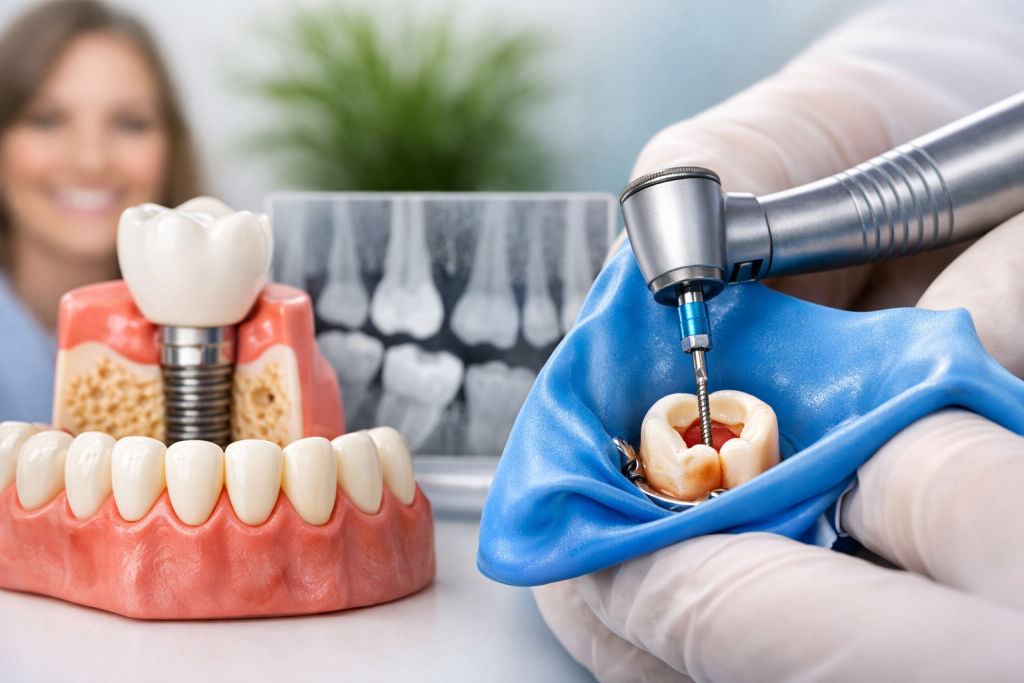
Saving a natural tooth often provides benefits that cannot be fully replicated by artificial replacements.
Potential advantages include:
- Preserving natural chewing ability
- Maintaining bite alignment
- Supporting jawbone health
- Avoiding more extensive replacement procedures
- Preserving surrounding healthy teeth
While every case is unique, retaining a healthy natural tooth is often considered the preferred long-term outcome when possible.
Root Canal Treatment vs Wisdom Tooth Extraction vs Wisdom Tooth Surgery
Although these procedures are sometimes compared, they address different dental problems.
| Procedure | Purpose | Goal |
| Root Canal Treatment | Treat infected pulp | Save the natural tooth |
| Wisdom Tooth Extraction | Remove problematic wisdom tooth | Prevent complications |
| Wisdom Tooth Surgery | Surgically remove impacted wisdom tooth | Resolve impaction or disease |
The choice between these procedures depends on the condition being treated and the long-term treatment objective.
Frequently Asked Questions (FAQs)
Is root canal treatment painful?
Modern root canal treatment is typically not painful because local anaesthesia numbs the treatment area. Most patients find the experience comparable to receiving a routine filling. Any discomfort experienced before treatment is often caused by the underlying infection rather than the procedure itself.
How long does a root canal treatment take?
Most root canal treatment procedures take between 60 and 90 minutes per appointment. More complex cases involving multiple canals or severe infection may require additional visits depending on the condition of the tooth.
How many visits does root canal treatment usually require?
Some root canal treatments can be completed in a single visit, while others may require two or more appointments. The number of visits depends on factors such as the severity of infection, tooth anatomy, and restoration requirements.
Can a tooth still get infected after root canal treatment?
Although uncommon, reinfection can occur if bacteria re-enter the tooth through new decay, cracks, or a damaged restoration. Regular dental examinations and proper oral hygiene help reduce the likelihood of future problems.
Can root canal treatment treat a dental abscess?
Yes. Root canal treatment is commonly used to remove the source of infection responsible for many dental abscesses. By eliminating infected pulp tissue and disinfecting the root canals, the procedure helps resolve infection and preserve the tooth whenever possible.
Is a dental crown always needed after root canal treatment?
Not always. However, crowns are frequently recommended for back teeth because they experience significant chewing forces. A crown helps strengthen and protect the remaining tooth structure, reducing the risk of future fractures.
Can I eat after root canal treatment?
Most patients can eat shortly after treatment once the numbness has worn off. Soft foods are often recommended initially, and hard or sticky foods should be avoided until the final restoration is completed.
Can I return to work after root canal treatment?
Most patients return to work, school, or normal daily activities on the same day or the following day after treatment. Recovery is generally straightforward, with only mild temporary sensitivity experienced by some individuals.
What is the alternative to root canal treatment?
The primary alternative is tooth extraction. However, extraction may require additional treatment such as a dental implant, bridge, or denture to replace the missing tooth and restore normal function.
When should I see a dentist for a tooth infection?
You should seek professional assessment if you experience persistent tooth pain, swelling, prolonged sensitivity, gum abscesses, facial swelling, or discomfort when chewing. Early diagnosis can improve treatment options and help prevent complications.
Schedule a Root Canal Treatment Today
Root canal treatment remains one of the most effective methods of treating tooth infections while preserving natural teeth.
Understanding the facts behind common myths can help patients make informed decisions about their oral health and seek treatment from a dedicated dental clinic in Singapore such as Root Canal Singapore. Schedule an appointment today before complications develop.
