


Dental crowns may undergo some damage over a period of time. A dental crown can sometimes be repaired instead of replaced when the damage is minor and the restoration remains structurally sound and well fitted. Small chips, limited surface damage or loss of cement retention may be manageable without making an entirely new crown, depending on the crown material and condition of the underlying tooth.
However, not every broken dental crown can be repaired. Extensive cracks, major fractures, recurrent looseness, poor fit or decay beneath the restoration may make replacement a more appropriate option.
The decision to repair a dental crown should therefore be based on more than the visible damage. A dentist needs to assess the crown, the remaining natural tooth, the crown margins and the patient’s bite before determining whether a repair can provide a predictable result.
Key Takeaways
Dental crown repair can be appropriate for selected problems, but the underlying tooth must remain healthy enough to support the restoration.
Important points include:
- Small chips or limited surface defects may sometimes be repaired.
- An intact loose crown may sometimes be recemented rather than replaced.
- Significant crown fractures are less likely to be suitable for repair.
- Tooth decay beneath a crown can make replacement necessary.
- Repeated looseness may indicate a problem beyond the dental cement.
- Crown material and the location of the damage influence repair options.
- The condition of the natural tooth is as important as the crown itself.
- Repair is appropriate only when the remaining restoration can continue functioning predictably.
A dental examination is necessary to determine whether conservative repair or complete replacement is appropriate.
Can Every Dental Crown Be Repaired?
No, not every dental crown can be repaired because the feasibility of repair depends on the extent, location and cause of the damage. A small defect affecting only part of the crown is different from a fracture that compromises the entire restoration.
Dental crowns are designed to function as protective coverings over prepared natural teeth. Their strength depends on the integrity of the restorative material, fit over the tooth and how chewing forces are distributed.
When only a limited area is affected, a dentist may be able to restore or smooth the damaged section without removing the crown.
When damage compromises the crown’s structural integrity or seal around the tooth, a localised repair may not provide an appropriate long-term solution.
The underlying cause also matters. Repairing a chipped area without addressing significant teeth grinding, for example, may expose the repaired crown to the same excessive forces.
When Dental Crown Repair May Be Possible
Dental crown repair may be possible when the damage is localised and the remainder of the restoration continues to fit and function appropriately.
The dentist considers whether the repaired crown will still protect the underlying tooth and tolerate normal biting forces.
Several situations may be suitable for a more conservative approach.
Minor Chips in a Dental Crown
A minor chip may sometimes be repaired when it affects only a limited part of the crown and does not significantly weaken the restoration.
Small chips can occur because of biting hard objects, dental trauma or gradual wear.
The appropriate treatment depends partly on the crown material.
A rough or very small surface defect may sometimes require only smoothing and polishing. Other localised defects may be repairable with a suitable dental material.
The dentist also needs to check whether the chip has changed the patient’s bite or exposed another layer of the crown.
A minor-looking chip should therefore still be evaluated before deciding that replacement is unnecessary.
Limited Surface Damage
Limited surface damage may be manageable without replacing the crown when the defect does not extend deeply through the restoration.
Surface irregularities can sometimes develop through normal wear or minor trauma.
If the crown remains stable and the margins continue to fit correctly, conservative management may be considered.
However, surface damage can occasionally be the visible part of a larger fracture.
The dentist should determine how far the defect extends before selecting a repair method.
A repair should restore an acceptable surface while maintaining the function and integrity of the crown.
A Loose Crown That Remains Intact
A loose dental crown may sometimes be recemented rather than replaced if the crown remains intact, fits the tooth correctly and the underlying tooth is healthy.
Dental cement can lose retention over time.
If the crown comes off without significant damage, the dentist can examine both the restoration and the prepared tooth.
When both remain suitable, the crown may be cleaned and secured again using appropriate dental cement.
Recementation is different from repairing a fractured crown, but it allows the existing restoration to remain in use without complete replacement.
The cause of the looseness should still be investigated, particularly if the crown has become loose more than once.
When Replacement Is the Better Option
Dental crown replacement is generally considered when damage is too extensive for a localised repair or when the existing restoration can no longer adequately protect the natural tooth.
Replacement may also be required even when the visible crown appears relatively intact if a significant problem has developed underneath it.
A Severely Cracked Dental Crown
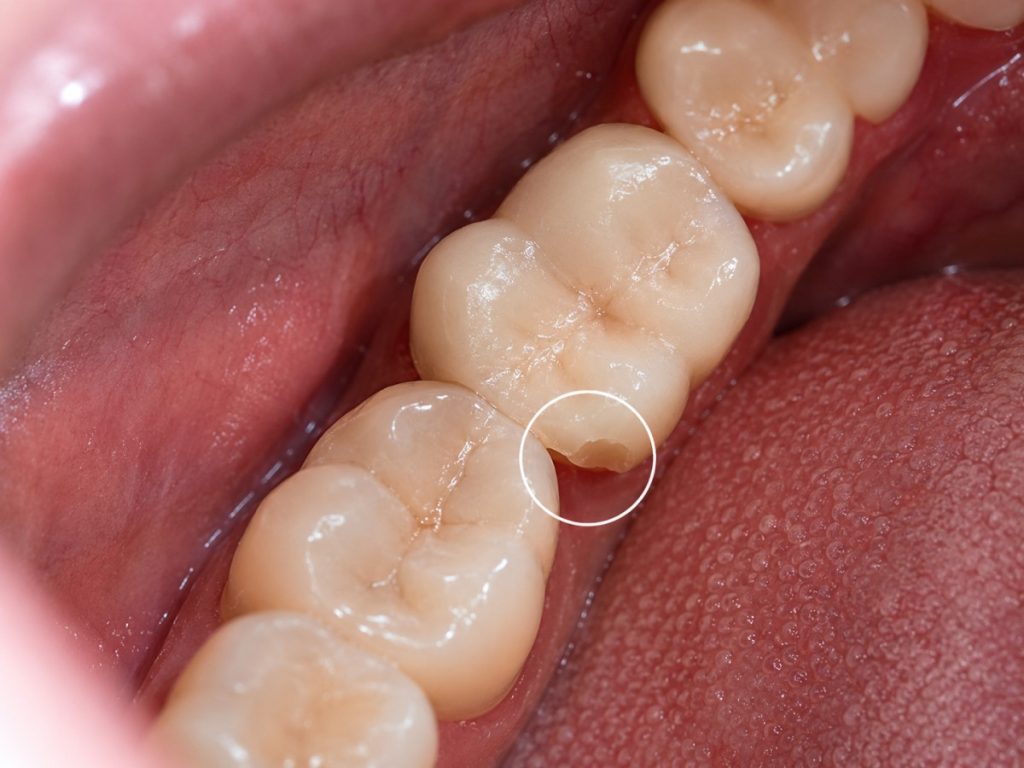
A severely cracked crown may need replacement when the fracture compromises the structural integrity of the restoration.
Cracks can develop from dental trauma, prolonged wear or excessive biting forces.
The location and depth of the crack are important.
A superficial line affecting only the external surface is different from a fracture extending through the crown.
A structurally weakened crown may continue to fracture under normal chewing forces even if an attempt is made to repair only the visible defect.
In such cases, replacement allows a new restoration to be designed around the current condition of the tooth.
A Large Portion of the Crown Has Broken
A crown with substantial material loss is less likely to be suitable for conservative repair.
A large fracture can change the crown’s shape, bite and ability to protect the underlying tooth.
It may also expose internal crown material or natural tooth structure.
Attempting to rebuild a large missing section directly may not reproduce the strength and fit of a complete restoration.
The dentist therefore considers how much of the original crown remains and whether the remaining material can continue functioning predictably.
If too much structure has been lost, replacement is generally considered.
Decay Has Developed Under the Crown
Decay beneath a crown often changes the treatment decision because the natural tooth must be treated before the restoration can be considered.
The artificial crown itself cannot develop tooth decay, but the natural tooth remains vulnerable, particularly around the restoration margin.
When decay extends beneath the crown, the dentist may need to remove the restoration to access the affected area fully.
Once the decay has been removed, the remaining tooth structure is evaluated.
If the tooth can still support a restoration, it may need a build-up and a new crown.
Repairing only the external crown would not address the disease underneath it.
The Crown No Longer Fits Correctly
A poorly fitting crown is generally not corrected by simply repairing its external surface.
A crown needs to fit the prepared tooth appropriately and maintain suitable margins.
Changes in the underlying tooth, recurrent decay or damage to the crown can affect this relationship.
An unsuitable margin may create areas where plaque and food debris accumulate more readily.
If the crown no longer fits correctly, replacement may be necessary to restore an appropriate relationship between the restoration and natural tooth.
The underlying cause should also be treated before the new crown is placed.
The Crown Keeps Becoming Loose
Repeated crown looseness may indicate that recementation alone is not resolving the underlying problem.
A crown can become loose because of loss of cement, but repeated episodes may indicate changes involving the crown, prepared tooth or bite.
Possible contributing factors include:
- Decay affecting the underlying tooth.
- Insufficient remaining tooth structure.
- Changes in the fit of the crown.
- Crown damage.
- Excessive biting or grinding forces.
The cause should be identified before the crown is repeatedly recemented.
If the restoration or tooth can no longer provide predictable retention, replacement or additional restorative treatment may be necessary.
How Dentists Decide Between Repair and Replacement
Dentists decide between crown repair and replacement by assessing whether the existing restoration can continue protecting the tooth after conservative treatment.
The decision involves both restorative and biological factors.
Extent of Crown Damage
Small, localised damage is generally more compatible with repair than a major fracture.
The dentist evaluates whether the defect affects only the surface or extends through a significant portion of the crown.
Crown Material
Crown material can influence which repair techniques are possible.
Porcelain, ceramic, zirconia and other restorative materials have different physical characteristics and bonding requirements.
A repair technique suitable for one material may not be appropriate for another.
Crown Fit
A crown must continue to fit appropriately if it is going to be retained.
Repairing a chipped surface does not correct a poorly fitting margin.
The dentist therefore evaluates the crown’s seating, margins and stability.
Condition of the Underlying Tooth
The natural tooth must be healthy enough to continue supporting the restoration.
Decay, cracks or substantial structural loss can change the treatment plan even when the crown itself appears repairable.
Location of the Damage
Damage in a heavily loaded chewing area may have different implications from a small defect in an area exposed to lower forces.
The dentist considers how normal biting and chewing will affect the repaired section.
Patient’s Bite

The way the upper and lower teeth contact each other can influence crown damage.
A heavy contact on one part of the crown can contribute to fracture or repeated repair failure.
The bite should therefore be assessed as part of treatment planning.
Dental Crown Repair vs Replacement
Repair and replacement address different levels of crown damage. Repair aims to preserve an existing restoration when the problem is limited, while replacement provides a new crown when the old restoration can no longer function predictably.
| Clinical Situation | Repair or Recementation | Replacement |
| Small surface chip | May be possible | Usually unnecessary if otherwise sound |
| Rough crown surface | Smoothing or polishing may help | Usually unnecessary |
| Intact loose crown | Recementation may be possible | Needed if fit is compromised |
| Significant crack | Often limited | More likely |
| Large fracture | Usually unsuitable | Commonly considered |
| Extensive decay underneath | Does not treat the cause | Often necessary after treating tooth |
| Poor crown fit | Limited benefit | More likely |
| Recurrent looseness | Depends on cause | May be required |
The final decision should reflect the complete condition of the restoration and tooth rather than one isolated finding.
What Happens During a Dental Crown Repair?
Dental crown repair depends on the type of damage identified during examination.
For a small chip, the dentist may first smooth rough edges or prepare the affected surface so a suitable restorative material can be applied.
The repair needs to integrate with the existing crown while restoring a comfortable surface and appropriate contour.
If the crown is intact but loose, treatment follows a different process.
The crown may be removed, and the inside of the restoration and underlying tooth are cleaned and examined. If both remain suitable, the crown can potentially be recemented.
The bite may also be checked to identify excessive contact that could have contributed to the problem.
What Happens During Crown Replacement?
Crown replacement involves removing the existing restoration and preparing the underlying tooth for a new crown.
Once the old crown is removed, the dentist can directly examine the natural tooth.
Any decay or damaged tooth structure is treated before the replacement restoration is made.
The tooth may need to be rebuilt if insufficient structure remains.
After preparation, an impression or digital scan records the tooth so the new crown can be fabricated.
A temporary crown may be placed while the permanent restoration is being produced.
The final crown is then checked for fit, contact with neighbouring teeth and bite before being secured.
Can a Broken Crown Damage the Tooth Underneath?
A broken crown can leave the underlying tooth more vulnerable when the damage exposes natural tooth structure or compromises the restoration’s protective coverage.
The extent of risk depends on how much of the crown has fractured.
An exposed tooth may become sensitive and can be more susceptible to additional damage.
Food and plaque can also accumulate in areas created by the fracture.
If the tooth underneath has also cracked, treatment may be more complex than simply repairing the crown.
Professional assessment helps determine whether the problem is limited to the restoration or involves the natural tooth as well.
What Should You Do If Your Crown Breaks?
A broken crown should be assessed rather than repaired using household materials.
If a piece of the crown has detached, keep it if practical and bring it to the dental appointment.
Avoid chewing hard foods on the affected tooth until it has been evaluated.
If the broken area has a sharp edge, take care to avoid repeatedly irritating the tongue or cheek.
Do not use household glue to attach a crown or broken crown fragment. These products are not designed for use within the mouth and can interfere with professional treatment.
Significant pain, swelling or signs of infection require timely dental assessment.
How to Reduce the Risk of Crown Damage
Reducing crown damage involves protecting both the restoration and the natural tooth supporting it.
Regular brushing and interdental cleaning help control plaque around the crown margins.
Mechanical habits also matter.
Several practical measures can reduce avoidable stress:
- Avoid chewing ice and other extremely hard objects.
- Do not use crowned teeth to open packaging.
- Have persistent teeth grinding or clenching assessed.
- Maintain daily cleaning around the crown margin.
- Attend dental reviews based on your oral health needs.
No crown can be guaranteed to remain undamaged indefinitely, but appropriate maintenance can reduce preventable complications.
Frequently Asked Questions (FAQs)
Can a chipped dental crown be repaired?
A small chip may sometimes be repaired or smoothed if the crown remains structurally sound and well fitted. Larger fractures are more likely to require crown replacement.
Can a broken porcelain crown be repaired?
Some limited porcelain damage may be repairable depending on its size, location and the condition of the remaining restoration. Significant fractures may prevent a predictable repair and require replacement.
Can a loose crown simply be glued back on?
An intact loose crown may sometimes be professionally recemented after the crown and tooth have been examined. Household glue should not be used because the cause of the looseness needs to be identified and appropriate dental materials are required.
How do I know whether my crown needs repair or replacement?
The decision depends on the extent of damage, crown fit, material, condition of the underlying tooth and bite. A dental examination is necessary because some problems underneath a crown cannot be assessed from the visible surface alone.
Can decay underneath a crown be repaired without removing it?
Treatment depends on the location and extent of the decay. When decay extends underneath the restoration, crown removal may be required to provide adequate access and determine how much healthy tooth structure remains.
Is crown repair permanent?
The expected durability of a repair depends on the defect, crown material, repair technique and biting forces. Some repairs can function well, while extensive damage may make complete replacement more predictable.
Should I replace an old crown even if it is not damaged?
Not solely because it is old. A crown that remains stable, appropriately fitted and clinically satisfactory may continue to function. Replacement decisions should generally be based on its condition rather than age alone.
Preserving a Crown When Repair Is Still Appropriate
A dental crown can sometimes be repaired instead of replaced when damage is minor, localised and does not compromise the restoration’s overall fit or strength. Small chips and certain surface defects may be manageable conservatively, while an intact loose crown may sometimes be recemented.
Complete replacement becomes more appropriate when the crown is significantly fractured, poorly fitting or repeatedly loose, or when decay or structural damage affects the natural tooth underneath.
The goal is not automatically to preserve or replace every crown. The appropriate approach is to determine which option can continue protecting the remaining tooth while providing stable function.
Find Out Whether Your Crown Can Be Preserved
If your crown is chipped, broken or loose and you are unsure whether it can be repaired, book a consultation with Dr. Seah’s Root Canal Clinic today. A dental assessment can evaluate the crown, underlying tooth and bite to determine whether repair, recementation or complete crown replacement is appropriate.
