


A dental crown procedure is usually performed on individuals who are missing teeth and would like a replacement. Dental crown replacement cost in Singapore varies depending on the crown material, condition of the underlying tooth, complexity of removing the existing restoration and whether additional dental treatment is required. Replacing an uncomplicated crown involves different clinical requirements from replacing one over a tooth affected by decay, fracture or problems involving the dental pulp.
A dental crown is a fixed restoration placed over a prepared natural tooth to restore its shape, function and protection. When an existing crown becomes damaged, loose, worn or poorly fitting, the dentist first needs to determine whether it can be repaired or recemented before recommending replacement.
The cost to replace a dental crown should therefore be considered as part of the complete treatment rather than simply the price of manufacturing a new crown. Examination, dental imaging, removal of the existing restoration, treatment of the underlying tooth, temporary restoration and the selected crown material can all influence the final treatment plan.
Key Takeaways
A dental crown replacement costs differ because the condition and treatment requirements of each tooth are different.
Important considerations include:
- Crown material can influence the overall treatment cost.
- The existing crown may need to be carefully removed before the tooth can be fully assessed.
- Decay or structural damage beneath the crown may require additional treatment.
- Root canal treatment is not routinely required for every crown replacement.
- A temporary crown may be required while the permanent restoration is being fabricated.
- Medisave should not automatically be assumed to cover routine crown replacement.
- A personalised quotation generally requires a clinical examination.
Comparing crown replacement costs is most useful when patients understand exactly what is included in each proposed treatment plan.
Understanding Dental Crown Replacement Cost
Dental crown replacement cost refers to the treatment required to remove or manage an existing crown and provide a new restoration when replacement is clinically appropriate.
It is different from placing a crown on a tooth for the first time because an existing restoration and previously prepared tooth are already involved.
The dentist may need to remove the old crown before the complete condition of the tooth can be seen.
Once the crown is removed, the tooth is assessed for decay, cracks and remaining healthy tooth structure. The findings can affect the final treatment requirements.
For example, a tooth that remains structurally sound may proceed relatively directly to preparation for a replacement crown. A tooth with extensive decay may require additional restorative treatment before a new crown can be made.
This variability is one reason crown replacement does not have one standard cost that applies to every patient.
Why Dental Crown Replacement Costs Vary
Dental crown replacement costs vary because several clinical and restorative components can form part of the procedure.
The existing crown’s condition, the tooth underneath it and the material selected for the replacement all influence treatment.
A dentist may also need to determine why the previous crown failed.
If a crown repeatedly becomes loose, simply replacing it without identifying the cause may not resolve the underlying problem.
Likewise, a broken dental crown can sometimes indicate excessive biting forces or structural problems involving the natural tooth.
A complete assessment therefore helps determine what treatment is actually required before costs can be estimated meaningfully.
Crown Material Can Affect the Cost
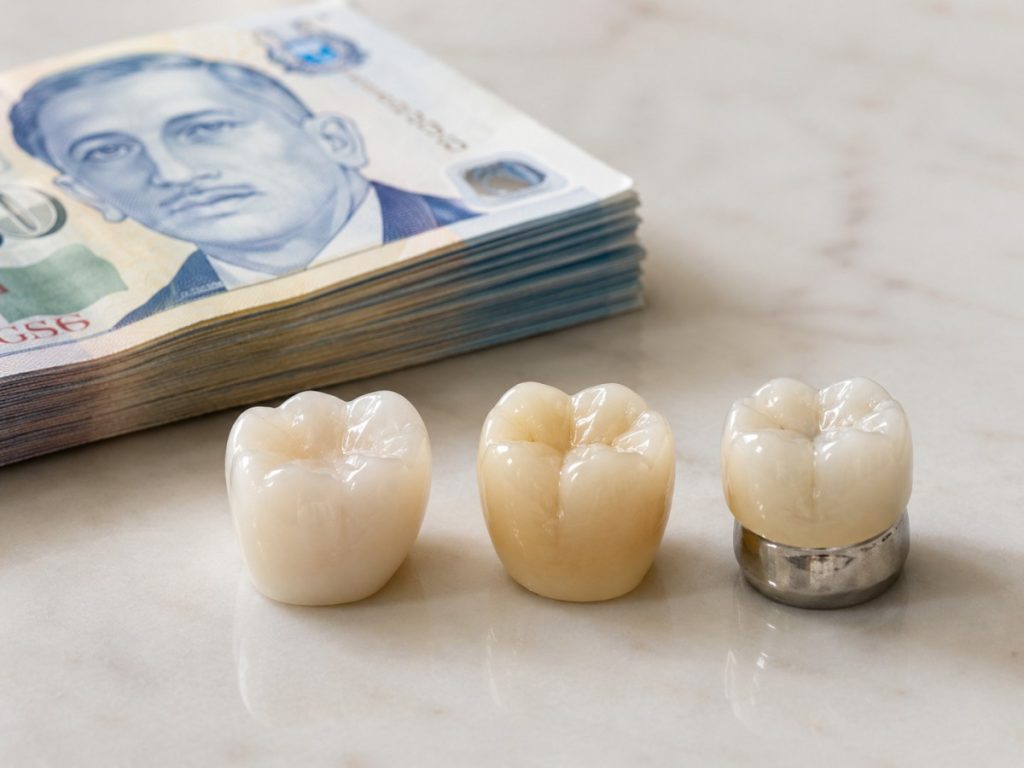
The material selected for a replacement crown can affect pricing because different materials involve different fabrication methods, laboratory processes and clinical applications.
Common crown materials can include ceramic, porcelain-based restorations and zirconia.
The appropriate choice depends on the location and condition of the tooth rather than cost alone.
Ceramic Crowns
Ceramic crowns are tooth-coloured restorations that may be considered when appearance is an important part of the treatment plan.
Their suitability depends on factors including the tooth position, available restorative space and bite.
Different ceramic systems can have different properties, so the term “ceramic crown” does not necessarily refer to one identical material.
Porcelain-Based Crowns
Porcelain can be used in different types of crown construction to provide a tooth-coloured external appearance.
The dentist considers the restoration’s functional and aesthetic requirements when selecting a porcelain-based option.
A crown used in a highly visible area may have different requirements from one used primarily for posterior chewing.
Zirconia Crowns
Zirconia is another restorative material used for dental crowns and other fixed restorations.
Its selection depends on the clinical situation, available space, appearance requirements and forces expected on the tooth.
A more expensive crown material is not automatically the most suitable choice for every patient.
The relevant question is whether the selected material is appropriate for the tooth being restored.
Does the Tooth’s Location Affect Crown Replacement?
The location of the tooth can influence crown replacement because front and back teeth have different functional and aesthetic requirements.
Anterior teeth are particularly visible when speaking and smiling, which can make appearance and shade matching important considerations.
Posterior teeth generally experience substantial chewing forces.
These differences can influence crown design, restorative material and preparation requirements.
The location may also affect how easily the dentist can access the existing restoration during removal and preparation.
However, tooth position alone does not determine the final cost. The condition of the underlying tooth remains an important part of treatment planning.
Condition of the Existing Crown
The condition of the old crown can affect the complexity of replacement.
A crown that has already become detached creates a different clinical situation from a firmly cemented restoration that needs to be deliberately removed.
Some crowns can be removed intact.
Others may need to be carefully sectioned into smaller portions to allow removal while limiting unnecessary force on the underlying tooth.
The old crown may not be reusable after this process.
The dentist also needs to determine whether the original crown failed because of fracture, cement loss, poor fit or another underlying dental condition.
These findings influence the next stage of treatment.
Condition of the Underlying Tooth
The condition of the natural tooth underneath the crown is one of the most important factors influencing the overall crown replacement treatment.
A crown can conceal much of the prepared tooth, so the full extent of a problem may only become apparent after the restoration is removed.
The dentist assesses how much healthy tooth structure remains and whether there is decay, fracture or other damage.
If the tooth remains healthy and structurally suitable, replacement may proceed with relatively limited additional restorative work.
If substantial tooth structure has been lost, further treatment may be required before a new crown can be supported predictably.
Additional Treatment Costs
Additional dental procedures can affect the overall cost when the underlying tooth requires treatment before crown replacement.
These procedures are not necessary for every patient.
Dental Examination and Imaging
A dental examination is needed to assess the crown, tooth and surrounding structures.
Dental X-rays or other imaging may be recommended when clinically necessary to evaluate the roots, supporting bone or areas that cannot be examined directly.
The extent of diagnostic assessment depends on the condition of the tooth and symptoms present.
Treatment of Tooth Decay
Decay underneath or around a crown needs to be treated before a new restoration is placed.
The dentist removes the affected tooth structure and determines whether sufficient healthy teeth remain.
Minor decay may require relatively limited additional restoration.
Extensive decay can substantially change the treatment plan because the tooth may require reconstruction before another crown can be fitted.
Restorative Build-Up
A restorative build-up may be required when substantial tooth structure has been lost.
The purpose of the build-up is to reconstruct the tooth sufficiently so it can support and retain a new crown.
Not every replacement crown requires this procedure.
Its necessity depends on the amount and quality of remaining tooth structure after the old crown and any decay have been removed.
Root Canal Treatment
Root canal treatment may be required if the dental pulp inside the tooth is irreversibly inflamed, infected or non-vital.
It is important to distinguish this from routine crown replacement.
A tooth does not require root canal treatment simply because an old crown is being replaced.
Symptoms, clinical tests and imaging help determine whether endodontic treatment is actually indicated.
If root canal treatment is necessary, it represents an additional procedure and therefore changes the overall treatment plan.
Does a Temporary Crown Affect Treatment Cost?
A temporary crown may be required when the permanent replacement crown is not completed during the same appointment.
The temporary restoration protects the prepared tooth while the definitive crown is being fabricated.
It can also maintain appearance and basic function between appointments.
Temporary crowns are not intended to provide the same long-term performance as permanent restorations.
Whether the temporary restoration is included within the overall crown replacement fee or quoted separately depends on the clinic’s treatment structure.
Patients can ask what is included in their quotation so that the complete process is clear before treatment begins.
Does Laboratory Work Affect Crown Pricing?
Laboratory fabrication can contribute to crown pricing because the permanent restoration needs to be designed and manufactured according to the prepared tooth and surrounding bite.
After tooth preparation, the dentist records the area using a conventional dental impression or digital scan.
This information is used to create a crown that fits the prepared tooth and contacts neighbouring and opposing teeth appropriately.
Different materials and fabrication methods can involve different laboratory processes.
The clinical and laboratory stages should work together because the quality of a crown depends not only on the material but also on its design, fit and integration with the patient’s bite.
Dental Crown Repair vs Replacement Cost
Repair and replacement have different treatment requirements, so their costs should not be compared without considering the type of crown problem.
A crown that has simply lost cement retention may sometimes be cleaned and recemented if it remains intact and continues to fit the tooth correctly.
A small surface defect may also occasionally be repairable.
Complete replacement is more likely when there is significant fracture, extensive wear, poor fit or substantial decay underneath the crown.
The key distinction is whether the existing restoration can continue functioning predictably after the problem has been addressed.
A lower-cost repair is not necessarily appropriate if the crown is structurally compromised. Similarly, complete replacement may be unnecessary when a conservative repair can provide an appropriate result.
Can Medisave Be Used for Dental Crown Replacement?
Medisave should not automatically be assumed to cover routine dental crown replacement because Medisave use for dental treatment in Singapore is generally associated with eligible surgical procedures rather than standard non-surgical restorative dentistry.
A crown is typically considered a restorative treatment.
However, a broader treatment plan can sometimes include separate procedures with different financing or claim eligibility.
Patients should verify the current requirements applicable to their specific treatment before assuming that Medisave can be used.
The clinic can explain which parts of the proposed treatment are payable directly and whether any associated procedures may fall under applicable claim arrangements.
Because healthcare financing rules can change, current official eligibility should be checked when planning treatment.
How to Compare Crown Replacement Quotations
Crown replacement quotations are most useful when the included treatment components are clearly understood.
Comparing only the headline price can be misleading if different clinics include different stages or materials.
Before deciding, patients may want clarification on:
- Which crown material is being recommended.
- Whether removal of the existing crown is included.
- Whether a temporary crown is included.
- Whether diagnostic imaging is separate.
- Whether additional tooth reconstruction is anticipated.
- What follow-up or fitting adjustments are included.
These questions allow treatment plans to be compared according to their actual scope.
The lowest quotation does not necessarily represent the same treatment as another quotation, while the highest price does not automatically indicate the most suitable option.
Should Price Determine Which Crown You Choose?
Price is an important practical consideration, but crown selection should primarily reflect the requirements of the tooth and restoration.
Different teeth experience different functional forces and aesthetic demands.
The amount of remaining tooth structure, position of the crown and patient’s bite can all influence material selection.
A crown also needs to fit accurately and allow the surrounding area to be maintained.
Selecting a restoration based only on price can overlook these clinical considerations.
Patients should understand why a particular material and treatment approach have been recommended and whether reasonable alternatives exist.
This allows cost to be considered alongside function, tooth protection and maintainability.
How to Protect Your Replacement Crown

Protecting a replacement crown helps reduce avoidable problems that could lead to further restorative treatment.
The crown itself cannot develop tooth decay, but the natural tooth around its margins can.
Daily brushing and interdental cleaning are therefore important.
Several habits can support ongoing crown maintenance:
- Clean carefully around the crown margin.
- Floss or use suitable interdental cleaning every day.
- Avoid biting hard non-food objects.
- Do not use crowned teeth to open packaging.
- Have persistent grinding or clenching assessed.
- Attend appropriate dental examinations and professional cleaning.
These measures cannot guarantee that a crown will never require further treatment, but they help maintain the natural tooth and surrounding tissues.
Frequently Asked Questions (FAQs)
How much does dental crown replacement cost in Singapore?
The cost varies according to the crown material, condition of the underlying tooth and additional treatment required. A personalised quotation normally follows examination because the tooth beneath the existing crown must also be considered.
Is replacing a crown more expensive than getting the original crown?
It can be, particularly if the underlying tooth requires additional treatment before the replacement restoration can be made. However, the treatment requirements vary substantially between individual cases.
Does crown material affect replacement cost?
Yes. Ceramic, porcelain-based and zirconia restorations can involve different materials and fabrication processes. Material should be selected according to clinical requirements rather than cost alone.
Is removing an old crown an additional procedure?
Removing the existing restoration forms part of the replacement process, although how clinics structure their fees can differ. Patients should ask whether crown removal is included in the treatment quotation.
Will I need root canal treatment before getting a replacement crown?
Not automatically. Root canal treatment is considered when the dental pulp is irreversibly inflamed, infected or non-vital. Crown replacement by itself does not create a need for root canal therapy.
Can Medisave pay for a replacement dental crown?
Routine non-surgical crown treatment should not automatically be assumed to qualify for Medisave. Current eligibility should be confirmed for the specific procedures included in the treatment plan.
Is repairing a crown cheaper than replacing it?
Repair may involve less treatment when the damage is limited, but it is only appropriate when the existing crown can remain functional. Significant structural damage, poor fit or underlying decay may make replacement necessary.
Looking Beyond the Price of the New Crown
Dental crown replacement cost in Singapore reflects more than the manufacture of a new restoration. The existing crown needs to be assessed and removed when appropriate, while the natural tooth underneath must be checked for decay, fractures and other conditions that could affect treatment.
Crown material, tooth reconstruction, diagnostic procedures and clinically necessary endodontic treatment can all change the overall treatment requirements.
For this reason, the most useful cost comparison is based on a complete treatment plan. Understanding what is included and why each procedure is recommended helps patients evaluate crown replacement according to both clinical requirements and expected expenses.
Get a Clearer Picture of Your Crown Replacement Needs
If your dental crown is damaged, loose or showing signs that replacement may be necessary, book a consultation with Dr. Seah’s Root Canal Clinic. A dental assessment can examine the existing crown and underlying tooth, identify any additional treatment required and provide a clearer treatment plan before proceeding with a replacement crown.
