

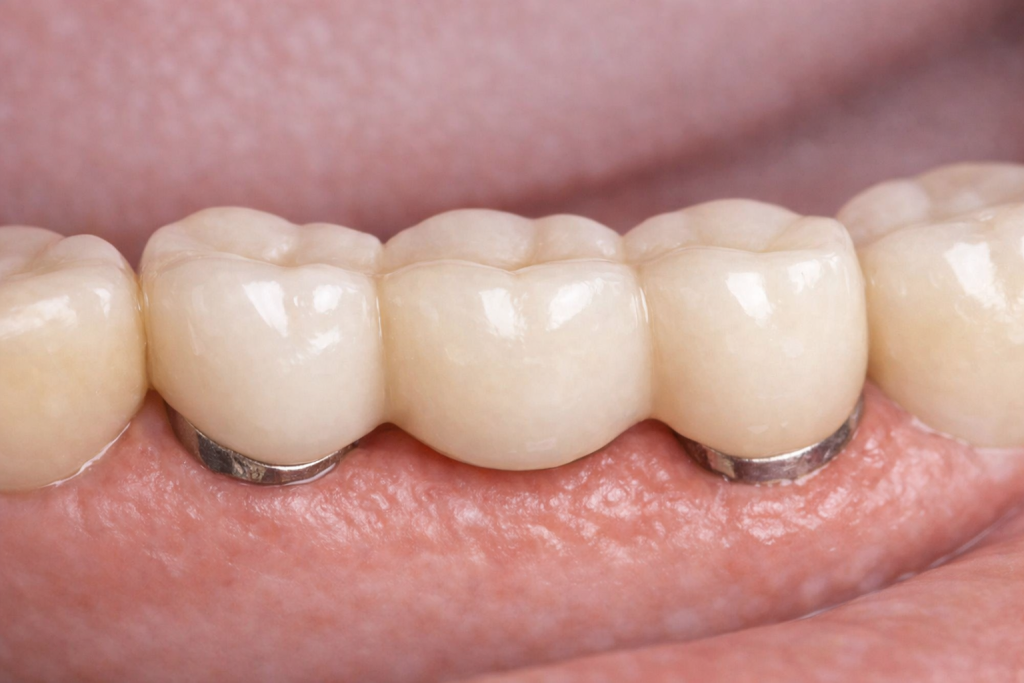
A dental bridge is a fixed dental restoration used to replace one or more missing teeth. It helps restore chewing ability, speech clarity, smile aesthetics, and bite alignment while preventing neighbouring teeth from shifting into the empty space. For many patients, a dental bridge in Singapore provides a long-term and natural-looking solution for missing tooth replacement.
In a traditional dental bridge, crowns are placed over the supporting teeth to anchor the restoration securely. If you would like to learn more about how crowns are used to restore damaged teeth, you can read our guide on dental crown replacement.
Key Takeaways About Dental Bridges
Here are some factors to note about dental bridges:
- A dental bridge replaces one or more missing teeth.
- It is a fixed restoration that remains in place and is not removable like a denture.
- Dental bridges can improve chewing, speech, and smile appearance.
- Several types of bridges are available, including traditional, Maryland, cantilever, and implant-supported bridges.
- Most dental bridges last 10 to 15 years or longer with proper care.
- The suitability of a dental bridge depends on the condition of the surrounding teeth and gums.
- A dental bridge is one of the most common missing tooth replacement options in Singapore.
What Is a Dental Bridge in Singapore?
A dental bridge is a prosthetic dental restoration designed to replace one or more missing teeth by “bridging” the gap left behind.
The restoration consists of three key components:
| Component | Description |
| Pontic | The artificial replacement tooth |
| Abutment Teeth | Natural teeth or implants that support the bridge |
| Crowns or Connectors | Structures that secure the bridge in place |
The pontic is custom-made to match the appearance of your natural teeth and is supported by neighbouring teeth or dental implants.
A dental bridge is commonly recommended when a patient has lost a tooth due to:
- Tooth decay
- Gum disease
- Dental trauma
- Tooth fracture
- Failed dental treatment
- Congenitally missing teeth
Why Replacing Missing Teeth Matters
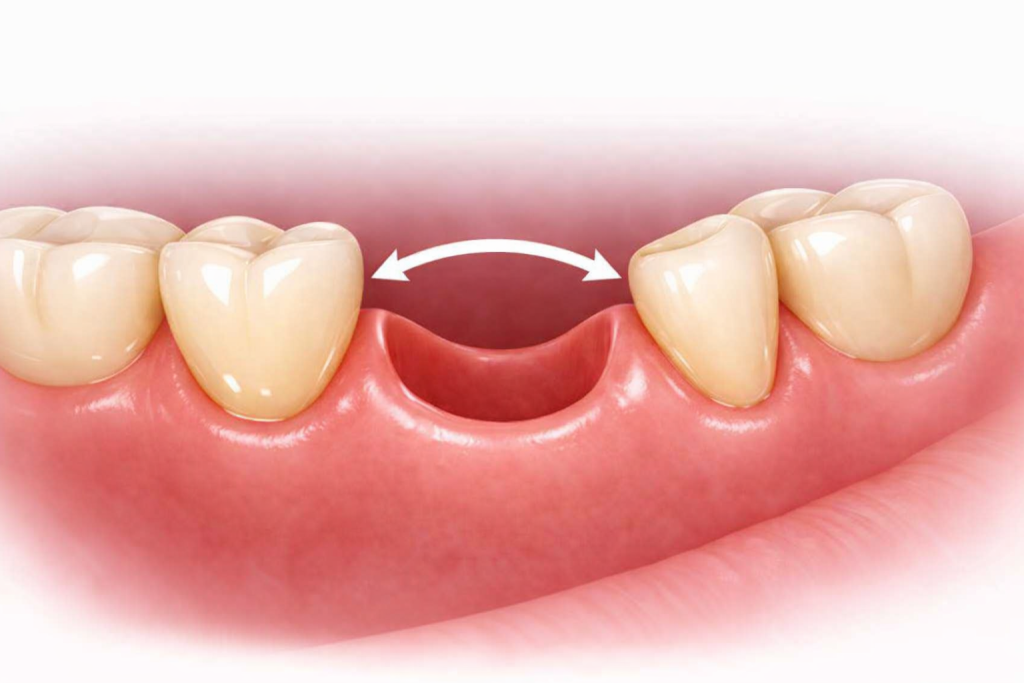
Many patients assume that a missing tooth is purely a cosmetic issue. However, tooth loss can affect oral health, function, and long-term dental stability.
When a tooth is lost, neighbouring teeth may gradually drift into the empty space. This can alter bite alignment (occlusion), create cleaning difficulties, and increase the risk of uneven tooth wear.
Potential consequences of untreated tooth loss include:
- Difficulty chewing food properly
- Speech changes or lisping
- Tooth shifting
- Bite problems
- Increased strain on neighbouring teeth
- Higher risk of gum disease
- Facial changes over time
- Reduced confidence when smiling
Replacing missing teeth helps preserve oral function and prevent these complications.
How Does a Dental Bridge Work?
A dental bridge works by using neighbouring support structures to hold an artificial tooth securely in place.
In a traditional bridge, crowns are placed over the teeth adjacent to the gap. These supporting teeth are known as abutment teeth.
The artificial tooth, called a pontic, is attached between the crowns, effectively restoring the missing tooth.
Once fitted, the bridge:
- Restores bite function
- Distributes chewing forces
- Improves appearance
- Maintains tooth alignment
- Prevents drifting of adjacent teeth
Types of Dental Bridges Available in Singapore
Traditional Dental Bridge
A traditional dental bridge is the most commonly used type of bridge.
It consists of one or more pontics supported by dental crowns placed on neighbouring teeth.
Best suited for:
- Single missing teeth
- Healthy adjacent teeth
- Posterior (back) teeth
Advantages:
- Strong and durable
- Natural appearance
- Widely used and predictable
Cantilever Dental Bridge
A cantilever bridge is supported by only one neighbouring tooth.
This option may be considered when only one adjacent support tooth is available.
However, because it places additional force on a single tooth, it is generally used in carefully selected situations.
Maryland Dental Bridge
A Maryland bridge uses a metal or ceramic framework bonded to the back surfaces of adjacent teeth.
Benefits include:
- Conservative treatment
- Minimal tooth preparation
- Suitable for front teeth
Because it relies on bonding rather than crowns, it is typically not recommended for areas exposed to heavy chewing forces.
Implant-Supported Dental Bridge
An implant-supported bridge uses dental implants rather than natural teeth for support.
This option may be suitable for patients with:
- Multiple missing teeth
- Healthy bone support
- Inadequate neighbouring teeth
Benefits include:
- Excellent stability
- Long-term durability
- Preservation of jawbone structure
- Reduced stress on natural teeth
Benefits of Getting a Dental Bridge in Singapore
Restores Chewing Function
Missing teeth can make chewing difficult and uncomfortable. A bridge helps restore biting efficiency and allows patients to enjoy a wider range of foods.
Improves Speech
Certain sounds require proper tooth positioning. Replacing missing teeth can improve pronunciation and speech clarity.
Prevents Teeth from Shifting
A bridge fills the gap and helps maintain proper alignment of surrounding teeth.
Supports Facial Structure
Tooth loss can affect facial contours. Replacing missing teeth helps maintain a more natural facial appearance.
Enhances Smile Aesthetics
Modern bridges are customised to blend with surrounding teeth for a natural-looking result.
Boosts Confidence
Many patients feel more comfortable smiling, speaking, and socialising after restoring missing teeth.
Is a Dental Bridge the Right Choice for You?
A dental bridge may be suitable if you:
- Have one or more missing teeth
- Have healthy supporting teeth
- Maintain good oral hygiene
- Have healthy gums
- Prefer a fixed solution instead of a removable denture
- Cannot undergo implant surgery due to various medical conditions
A dental bridge may not be ideal if:
- Significant gum disease is present
- Supporting teeth are severely weakened
- Extensive bone loss has occurred
- Oral hygiene is poor
- Another treatment option would provide a better long-term outcome
A comprehensive dental examination is necessary to determine suitability.
How Much Does a Dental Bridge Cost in Singapore?
The cost of a dental bridge in Singapore varies depending on several factors.
Factors influencing treatment costs include:
- Type of bridge selected
- Number of teeth being replaced
- Material used
- Complexity of treatment
- Need for additional procedures
- Condition of supporting teeth
Materials commonly used include:
- Porcelain-fused-to-metal
- All-ceramic restorations
- Zirconia bridges
- Metal-based restorations
Implant-supported bridges generally involve higher treatment costs than traditional bridges because they require surgical implant placement.
A consultation is necessary to determine the most suitable treatment plan and provide an accurate estimate.
Dental Bridge vs Dental Implant: Which Is Better?
One of the most common questions patients ask is whether a bridge or implant is the better option.
| Factor | Dental Bridge | Dental Implant |
| Surgery Required | No | Yes |
| Treatment Time | Usually shorter | Usually longer |
| Reliance on Adjacent Teeth | Yes | No |
| Bone Preservation | Limited | Excellent |
| Upfront Cost | Often lower | Often higher |
| Longevity | Long-lasting | Potentially longer-lasting |
The best option depends on individual oral health, treatment goals, and clinical findings.
Dental Bridge vs Denture
| Factor | Dental Bridge | Denture |
| Fixed in Place | Yes | Usually removable |
| Stability | High | Variable |
| Comfort | Natural feel | Adjustment period required |
| Speech | Often improved | May require adaptation |
| Chewing Efficiency | Better | Variable |
Bridges are often preferred by patients seeking a fixed replacement option.
What Happens During a Dental Bridge Procedure?
Step 1: Consultation and Assessment
The dentist evaluates:
- Missing tooth area
- Gum health
- Bone support
- Bite alignment
- Supporting teeth
X-rays and diagnostic scans may be required.
Step 2: Tooth Preparation
Supporting teeth are carefully prepared for crowns when a traditional bridge is planned.
Step 3: Digital Scans or Impressions
Accurate measurements are taken to create a custom bridge.
Step 4: Temporary Bridge Placement
A temporary restoration may be placed while the final bridge is being fabricated.
Step 5: Final Bridge Placement
The permanent bridge is checked for comfort, fit, appearance, and bite alignment before being cemented into position.
How Long Does a Dental Bridge Last?
A dental bridge typically lasts between 10 and 15 years, although many can last significantly longer.
Longevity depends on:
- Oral hygiene
- Gum health
- Bite forces
- Material selection
- Regular dental visits
- Smoking habits
Some bridges remain functional for more than 20 years when properly maintained.
What Are the Potential Disadvantages of a Dental Bridge?
Although dental bridges are highly successful, they do have limitations.
Potential disadvantages include:
- Supporting teeth may require preparation
- Bridges do not prevent bone loss beneath the missing tooth area
- Repairs or replacement may eventually be needed
- Cleaning underneath the bridge requires special techniques
- Not every patient is a suitable candidate
Understanding both benefits and limitations helps patients make informed treatment decisions.
Common Problems With Dental Bridges
Potential issues include:
- Loose crowns
- Chipped porcelain
- Gum irritation
- Food trapping beneath the bridge
- Decay affecting supporting teeth
- Bite discomfort
Regular dental reviews help identify problems early.
Can a Dental Bridge Be Repaired?
In some cases, yes.
Minor issues such as loose crowns or small porcelain fractures may be repairable.
However, severe wear, extensive damage, or recurrent decay affecting supporting teeth may require replacement of the entire bridge.
A clinical assessment is required to determine the best solution.
How to Clean and Care for a Dental Bridge
Maintaining a dental bridge is essential for long-term success.
Recommended care includes:
- Brushing twice daily
- Cleaning beneath the pontic
- Using floss threaders
- Using interdental brushes when recommended
- Attending regular dental examinations
Good oral hygiene helps protect both the bridge and supporting teeth.
Why Many Patients Choose Dental Bridges in Singapore
Dental bridges remain one of the most widely used restorative dental treatments in Singapore.
Many patients choose bridges because they:
- Provide a fixed solution
- Restore appearance and function
- Require less treatment time than some alternatives
- Offer predictable outcomes
- Can be customised to match natural teeth
For patients who are not suitable candidates for implants, a dental bridge may provide an effective alternative.
When Should You Consider a Dental Bridge?
You may wish to discuss a dental bridge with your dentist if you:
- Have recently lost a tooth
- Are struggling to chew comfortably
- Notice neighbouring teeth shifting
- Want a fixed replacement option
- Are seeking an alternative to dentures
Early intervention often helps prevent future complications.
Frequently Asked Questions (FAQs)
The best option depends on your oral health, number of missing teeth, and condition of supporting teeth. Traditional bridges are common, while implant-supported bridges may offer greater long-term stability in suitable cases.
Costs vary based on the type of bridge, materials used, number of teeth being replaced, and treatment complexity. A consultation is required for an accurate estimate.
Neither option is universally better. Dental implants preserve bone and do not rely on neighbouring teeth, while bridges often involve shorter treatment times and lower upfront costs.
Yes. Dental bridges can replace a single tooth or multiple adjacent missing teeth, depending on the design and available support structures.
Most dental bridges require two or more appointments over several weeks, depending on treatment complexity and laboratory fabrication times.
Food particles can occasionally accumulate beneath the pontic. Proper cleaning techniques and specialised oral hygiene tools help minimise this issue.
Modern bridges are customised to match the colour, shape, and size of surrounding teeth, helping them blend naturally into the smile.
The procedure is typically performed under local anaesthesia and is generally comfortable. Some temporary sensitivity may occur following treatment.
Yes. Dental bridges are commonly used to replace missing molars and restore chewing function.
A dental crown covers and protects a damaged tooth, whereas a dental bridge replaces one or more missing teeth by spanning the gap between supporting teeth or implants.
Can a Dental Bridge in Singapore Fix Your Smile?

Yes. A dental bridge in Singapore can effectively restore missing teeth, improve oral function, enhance smile aesthetics, and help maintain proper dental alignment.
The most suitable treatment depends on factors such as the number of missing teeth, the condition of surrounding teeth, gum health, and long-term treatment goals. A professional assessment can help determine whether a traditional bridge, Maryland bridge, cantilever bridge, or implant-supported bridge is the best option.
For many patients, a dental bridge from a trusted clinic such as Root Canal Singapore remains a reliable and proven solution for restoring both confidence and oral function. Contact the team today to set up an appointment.
