
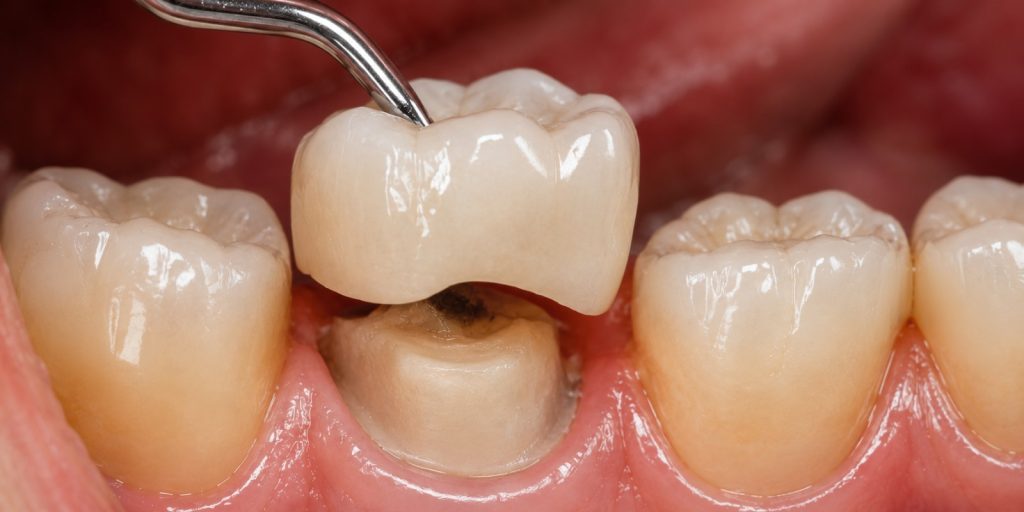
The dental crown replacement procedure involves removing the existing crown, examining and preparing the underlying tooth, recording its shape and fitting a new restoration. The exact process depends on why the original crown needs replacement and the condition of the natural tooth underneath it.
Replacing a dental crown may be necessary when the existing restoration becomes significantly damaged, loose, worn or poorly fitting. Replacement may also be required when tooth decay develops beneath the crown or when treatment of the underlying tooth changes its shape sufficiently that the original restoration can no longer be used.
The procedure is not simply an exchange of one crown for another. Once the old restoration is removed, the dentist needs to determine whether the remaining tooth is healthy and structurally suitable for a new crown. Additional restorative or endodontic treatment may sometimes be necessary before the replacement crown can be completed.
Key Takeaways
A dental crown replacement generally involves several clinical stages designed to evaluate the tooth and create a restoration that fits its current condition.
Important points include:
- The existing crown is assessed before it is removed.
- Local anaesthesia may be used when appropriate during treatment.
- The underlying tooth is checked for decay, cracks and structural damage.
- Additional dental treatment may be necessary before a new crown is made.
- The tooth may require further preparation for the replacement restoration.
- An impression or digital scan records the prepared tooth.
- A temporary crown may protect the tooth while the permanent crown is fabricated.
- The final crown is checked for fit, contact and bite before placement.
The condition discovered underneath the existing crown can influence the final treatment plan.
When Is Crown Replacement Needed?
Crown replacement is needed when the existing restoration can no longer adequately protect the underlying tooth or provide appropriate function. Replacement is not automatically necessary simply because a crown is old.
A dental crown can develop both mechanical and biological problems.
Mechanical problems involve the restoration itself and may include substantial wear, fracture or repeated loss of retention. Biological problems affect the natural tooth or surrounding tissues and can include decay, pulp disease or changes around the crown margin.
Common reasons a crown may need replacement include:
- Significant cracking or fracture
- Repeated crown looseness
- Extensive wear
- Poor or deteriorating fit
- Decay extending beneath the restoration
- Structural changes to the underlying tooth
- Problems that prevent the existing crown from being predictably repaired
A clinical examination helps distinguish conditions requiring replacement from problems that may be managed through repair or recementation.
Can a Crown Be Repaired Instead of Replaced?
Some crown problems can be repaired without completing the full dental crown replacement procedure. The appropriate option depends on the extent of damage and the condition of the tooth.
For example, an intact crown that has simply lost cement retention may sometimes be cleaned and recemented.
A small surface chip may also occasionally be repairable depending on its location, material and effect on the restoration.
Replacement becomes more likely when damage affects the structural integrity of the crown, the restoration no longer fits correctly or the underlying tooth requires substantial treatment.
The dentist therefore needs to determine whether retaining the existing crown provides a predictable result before recommending replacement.
Preparing for the Dental Crown Replacement Procedure
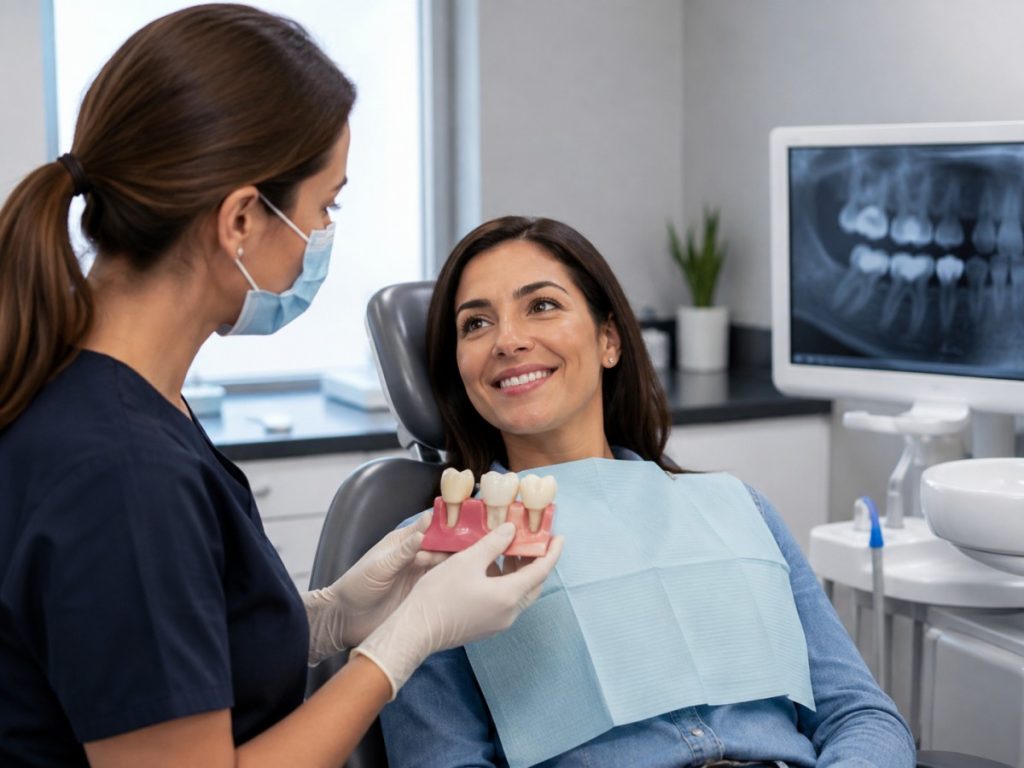
Preparation for crown replacement begins with assessing the restoration, underlying tooth and surrounding oral structures. This helps identify the likely reason for replacement and whether additional treatment may be required.
The dentist may ask about symptoms such as sensitivity, biting discomfort or spontaneous tooth pain.
The crown is examined for movement, cracks, wear and changes around its margins.
Dental imaging may be required to evaluate areas that cannot be seen directly, including the tooth root and surrounding bone.
If there are signs of a possible pulp or root canal problem, further diagnostic tests may be performed.
This initial assessment is important because replacing a crown without identifying an underlying dental problem could leave the actual cause untreated.
Step-by-Step Crown Replacement Process
The process of replacing a dental crown generally follows a sequence from removal of the old restoration through to fitting the new crown. The exact steps may vary according to the condition of the tooth.
Step 1: Local Anaesthesia When Required
Local anaesthesia may be administered before removing or preparing a crown when the tooth or surrounding tissues could otherwise be sensitive.
The need for anaesthesia depends on the tooth and procedure.
A tooth with a healthy dental pulp can respond to pressure, temperature and preparation. Anaesthesia can therefore help maintain comfort while the old restoration is removed and the tooth is prepared.
A previously root canal-treated tooth does not contain vital pulp tissue within its root canal system, but the surrounding gums and supporting tissues remain capable of sensation.
The dentist determines whether local anaesthesia is appropriate for the planned procedure.
Step 2: Removing the Existing Dental Crown
The existing crown needs to be removed so the underlying natural tooth can be properly assessed.
Different techniques may be used depending on the crown material, cement and how securely the restoration remains attached.
In some situations, the crown can be removed intact. In others, it may need to be sectioned into parts so it can be taken off without applying unnecessary force to the tooth.
Removal may make the existing crown unsuitable for reuse.
The objective is to gain access to the underlying tooth while preserving as much healthy natural tooth structure as reasonably possible.
Step 3: Examining the Tooth Under the Crown
Once the old crown has been removed, the dentist can directly evaluate tooth structure that was previously hidden.
This is an important stage because the condition beneath the restoration may differ from what could be determined before removal.
The dentist checks for decay, cracks, weakened areas and the amount of healthy tooth structure remaining.
The crown margins are also relevant because decay can develop where the restoration meets the natural tooth.
Findings at this stage may confirm the original treatment plan or indicate that additional treatment is necessary before proceeding.
Step 4: Treating Any Tooth Decay
Any clinically significant decay identified beneath the crown needs to be addressed before the new restoration is completed.
The affected tooth structure is removed and the remaining tooth is evaluated.
Limited decay may leave sufficient healthy structure for straightforward crown preparation.
More extensive decay can require additional restorative work to rebuild the tooth.
If a substantial amount of tooth structure has been lost, the dentist needs to determine whether the tooth remains suitable for another crown.
The replacement restoration should be supported by an appropriately treated and prepared tooth rather than simply covering untreated decay.
Step 5: Assessing the Dental Pulp
The dental pulp may need assessment when the tooth has symptoms or findings suggesting inflammation or infection.
The pulp is the soft tissue within the tooth containing nerves and blood vessels.
A crown replacement does not automatically require root canal treatment. However, deep decay, cracks or previous dental trauma can affect pulp health.
If the pulp is irreversibly inflamed or infected and the tooth remains suitable for preservation, root canal treatment may be required before the definitive crown is completed.
Addressing endodontic disease before placing the final restoration can avoid having to interrupt or modify a newly fitted crown shortly afterwards.
Step 6: Rebuilding the Tooth if Necessary
A tooth that has lost substantial structure may require a restorative build-up before crown preparation can be completed.
The purpose of a build-up is to recreate sufficient form to support and retain the new crown.
Not every crown replacement requires this step.
The amount of remaining healthy tooth structure determines whether additional reconstruction is needed.
A build-up should not be confused with the final crown. It forms part of the underlying foundation over which the definitive restoration is subsequently placed.
Step 7: Preparing the Tooth for the New Crown
The tooth is prepared so the replacement crown has appropriate space, shape and support.
Some tooth preparation was already completed when the original crown was made. However, additional preparation may be necessary during replacement.
Decay removal, previous restoration changes or damage can alter the shape of the tooth.
The dentist may therefore refine the preparation to create suitable margins and adequate space for the selected crown material.
The objective is to preserve appropriate healthy tooth structure while creating a form that can support the new restoration.
Step 8: Taking a Dental Impression or Digital Scan
Once preparation is complete, the tooth needs to be recorded accurately so the replacement crown can be fabricated.
This can be done using a conventional dental impression or a digital scan.
A traditional impression uses dental material to capture the shape of the prepared tooth and surrounding structures.
A digital scan uses an intraoral scanner to create a digital representation of the teeth.
Both methods aim to provide the information needed to design a crown that fits the prepared tooth and works appropriately with neighbouring and opposing teeth.
The specific method depends on the clinical workflow and restoration being produced.
Step 9: Selecting the Crown Material and Appearance
The replacement crown material is selected according to factors such as tooth position, available space, bite and aesthetic requirements.
Common restorative options can include ceramic, porcelain-based and zirconia crowns.
No single material is automatically suitable for every tooth.
A front tooth may have different aesthetic requirements from a molar exposed to substantial chewing forces.
If the crown is visible when smiling, shade and appearance may also be matched with surrounding teeth where appropriate.
Replacement provides an opportunity to reassess the material according to the tooth’s current condition rather than automatically duplicating the previous crown.
Step 10: Placing a Temporary Crown
A temporary crown may be placed to protect the prepared tooth while the permanent crown is being fabricated.
Temporary crowns help cover exposed tooth structure, maintain appearance and allow basic function between appointments.
They are not intended to have the same long-term strength or retention as definitive restorations.
Patients may therefore receive instructions to avoid particularly hard or sticky foods during this period.
Cleaning around the temporary crown remains important, although flossing techniques may need to be modified to reduce the chance of accidentally dislodging it.
If the temporary crown becomes loose or falls out, the dental clinic should be contacted.
Step 11: Removing the Temporary Crown
At the final fitting appointment, the temporary crown is removed and the prepared tooth is cleaned.
The dentist checks the tooth before placing the permanent crown.
This provides another opportunity to identify any changes that have occurred between appointments.
The permanent restoration is then positioned over the prepared tooth for evaluation.
The crown should seat appropriately on the tooth without obvious gaps or instability.
Final cementation should generally take place only after the restoration has been checked.
Step 12: Checking the Permanent Crown’s Fit
Crown fitting involves assessing how accurately the restoration sits on the prepared tooth and interacts with surrounding structures.
The dentist evaluates the crown margins and contact with neighbouring teeth.
An appropriate fit is important because poorly adapted margins can create areas that are difficult to maintain.
The contact between neighbouring teeth also needs to allow appropriate function while reducing excessive food trapping.
If the crown does not fit as intended, adjustments or further laboratory work may be necessary before permanent placement.
Step 13: Checking and Adjusting the Bite
The bite is checked to determine how the replacement crown contacts the opposing teeth.
A crown that is too high can receive excessive force when the patient bites.
This may cause discomfort and place unnecessary stress on the restoration or supporting tooth.
The dentist may ask the patient to bite on marking material so contact points can be identified.
Minor adjustments can then be made when necessary.
The crown should ultimately feel compatible with the patient’s normal bite rather than creating an obvious premature contact.
Step 14: Cementing the Permanent Crown
Once the fit and bite are considered appropriate, the permanent crown can be secured to the prepared tooth.
Dental cement or another appropriate retention method is selected according to the crown and clinical situation.
Excess cement around the margins is carefully removed.
The patient may then receive instructions regarding eating, oral hygiene and what sensations can reasonably be expected after treatment.
The replacement crown should provide coverage and protection while allowing the tooth to function within the patient’s bite.
Recovery After Treatment

Recovery after dental crown replacement is generally focused on allowing the tooth and surrounding gum tissues to settle after treatment.
Some temporary sensitivity may occur, particularly when the tooth retains a healthy dental pulp.
The gums can also feel mildly tender following procedures performed around the crown margins.
These symptoms should generally improve rather than progressively worsen.
The patient should follow individual instructions regarding eating and oral hygiene.
Once local anaesthesia has worn off, care should be taken to avoid accidentally biting the cheek, lip or tongue.
A newly fitted crown may initially feel different because its contours have changed, but it should not continue to feel excessively high or uncomfortable during normal chewing.
What Symptoms Are Not Normal After Crown Replacement?
Persistent or worsening symptoms after crown replacement should be assessed because they can indicate a problem with the restoration or underlying tooth.
Symptoms that warrant attention include significant spontaneous pain, increasing swelling, persistent biting pain or temperature sensitivity that does not settle.
A crown that feels noticeably high when biting should also be evaluated.
In some cases, the issue may require a relatively simple bite adjustment.
In other situations, symptoms can originate from the dental pulp or supporting tissues.
The cause should therefore be diagnosed rather than assuming all post-treatment discomfort is part of normal recovery.
How to Care for a Replacement Crown
A replacement crown requires daily care because the natural tooth beneath and around the restoration remains susceptible to dental disease.
Brush the crown and surrounding teeth thoroughly, paying particular attention to the gumline and crown margins.
Clean between the crowned tooth and neighbouring teeth using an appropriate interdental method.
Several everyday measures can help maintain the restoration:
- Brush consistently using an appropriate technique.
- Clean between teeth every day.
- Avoid using crowned teeth to open packaging or bite non-food objects.
- Have persistent grinding or clenching assessed.
- Attend dental examinations according to individual oral health needs.
Good maintenance protects both the restoration and the natural tooth supporting it.
Frequently Asked Questions (FAQs)
Is replacing a dental crown painful?
Local anaesthesia may be used to minimise discomfort when removing and preparing the crown. Some temporary sensitivity or gum tenderness may occur afterwards, but persistent or severe pain should be assessed.
Does the old crown always have to be cut off?
No. Some crowns can be removed intact, while others need to be sectioned during removal. The technique depends on the crown material, retention and condition of the underlying tooth.
Can the same dental crown be reused?
An existing crown may occasionally be reusable if it can be removed intact, still fits accurately and both the restoration and underlying tooth remain suitable. Many replacement procedures require a new crown because the old restoration is damaged or the tooth shape has changed.
How long does a dental crown replacement procedure take?
The total treatment timeline depends on the condition of the tooth, whether additional procedures are necessary and how the permanent crown is fabricated. Conventional treatment may involve separate preparation and fitting appointments.
Do I always need a temporary crown?
Not every restorative workflow is identical, but a temporary crown is commonly used when the permanent restoration is not fitted during the same appointment. It protects the prepared tooth between visits.
Do I need a root canal before replacing my crown?
Not automatically. Root canal treatment is considered when the dental pulp is irreversibly inflamed, infected or non-vital and the tooth is suitable for preservation. Crown replacement alone is not an indication for root canal treatment.
What happens if decay is found under my old crown?
The decay needs to be removed and the remaining tooth assessed. Depending on how much healthy tooth structure remains, the tooth may require a build-up, additional treatment or a revised restorative plan before another crown is placed.
A Successful Replacement Begins Beneath the Crown
The dental crown replacement procedure involves more than removing an old restoration and fitting a new one. The underlying tooth must first be examined for decay, structural damage and pulp-related problems that could affect the success of the replacement.
Once the tooth is healthy and appropriately prepared, an impression or digital scan can be used to create the definitive restoration. A temporary crown may protect the tooth until the permanent crown is checked for fit, contact and bite and then secured in place.
This diagnosis-first approach ensures that the new crown is planned around the tooth’s current condition rather than simply reproducing the restoration that was previously there.
Understand What Your Crown Replacement Will Involve
If your dental crown is damaged, loose, worn or no longer fitting as expected, book a consultation with Dr. Seah’s Root Canal Clinic today. An assessment can examine both the existing restoration and the natural tooth underneath it to determine whether crown replacement is required and whether any additional treatment should be completed first.